

I answer with an opinion, because the reviews for this place are genuinely all over the map, and a shrug helps nobody standing on the corner of Orchard and Delancey trying to decide.
Let me walk you through all five, tell you which one my husband and I would book again tomorrow, and which one you can skip without guilt. If you are still mapping out the neighborhood, my full guide to the best things to do in the Lower East Side pairs beautifully with a museum morning.
First, what the Tenement Museum actually is (and isn’t)
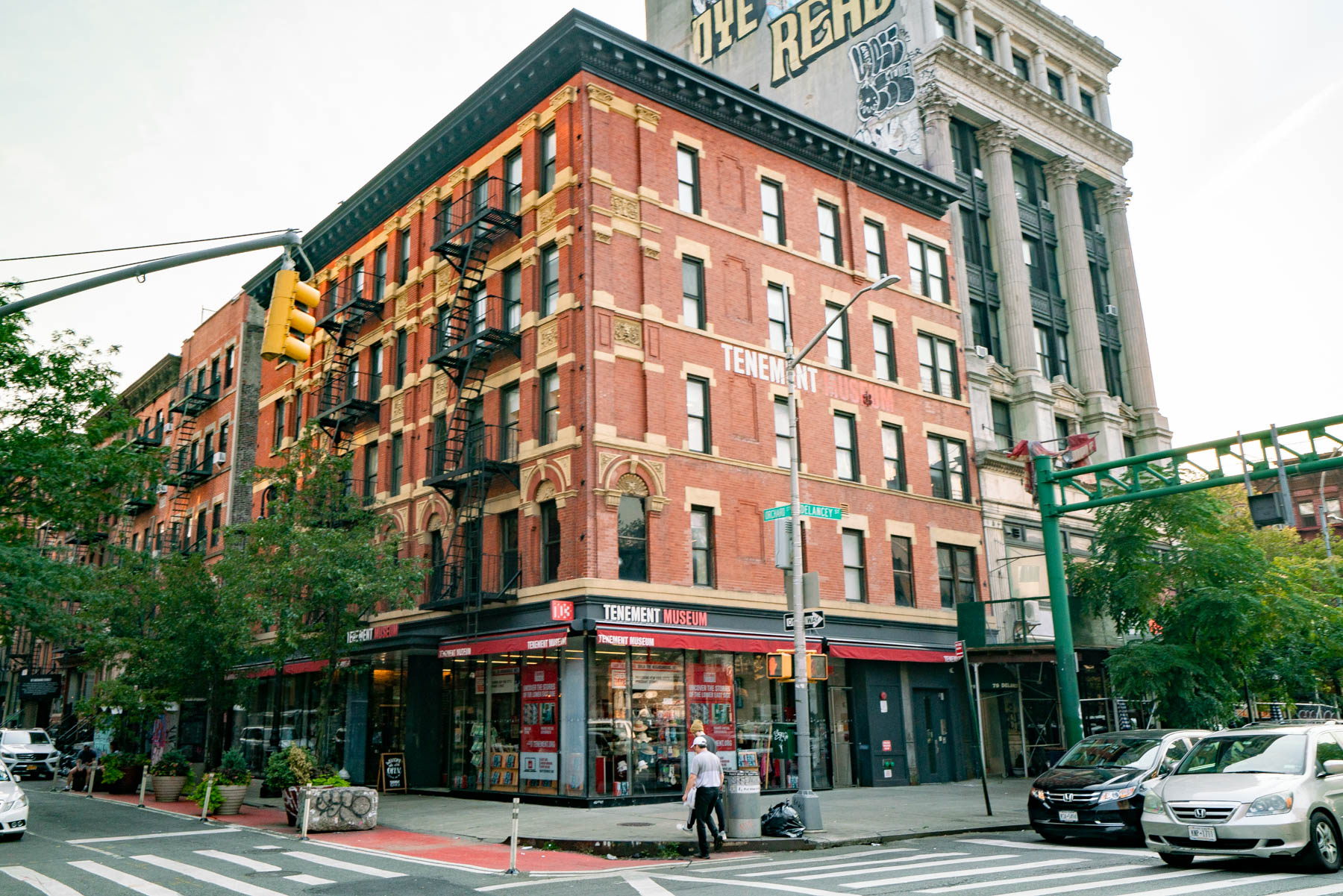
This is not a museum you wander. There is no big hall of glass cases you drift through at your own pace. The whole thing is accessible only by guided tour, in small groups, and each tour runs somewhere around 60 to 75 minutes. The visitor center and shop sit at 103 Orchard Street, and most tours gather right at the corner of Orchard and Delancey before your guide walks you in.
The heart of it is 97 Orchard Street, a real tenement built in 1863 that sat sealed and abandoned for more than fifty years before it was rediscovered. When they opened it back up, the apartments were essentially frozen. What you are walking through are restored and recreated homes of the immigrant and migrant families who actually lived there. That is the magic of the place. It is also the source of most of the complaints, and I will get to those.
Tickets run $30 per person, per tour, with a small service fee (around $3) if you book online, which you absolutely should. These tours are capped at small groups and they sell out, especially on weekends. Booking the morning of and hoping for the best? Amateur move. My sister-in-law tried it. We ended up at a diner instead.
The five tours, ranked by whether I’d send you
The lineup rotates a little season to season, but these are the core five most visitors are choosing between. I am going to be honest about each one, including the two I would think twice about.
The list, in my order
2 I’d go back to and 3 only if it suits you. My verdict on every one, and the ones nearby from my other lists.
Under One Roof
- Cost$30
- Address103 Orchard Street
If you take one tour, take this one. Under One Roof is the newer building at 103 Orchard, and it tells the story of three families who lived there after World War II: the Epsteins, Jewish refugees who survived Nazi-occupied Poland; the Saez-Velez family from Puerto Rico; and the Wongs, who came from China. Three families, one building, three completely different Americas under a single roof.
Why I send people here first: it is recent enough to feel close. These are not sepia-toned strangers. These are people whose kids could be your neighbors now, and the tour lands emotionally in a way the older apartments sometimes don’t for first-timers. The garment shop recreation stopped me cold the first time. My husband, who claims museums bore him, brought it up unprompted three days later at dinner. That is the tell.
One more practical point. Because it is the newer building, 103 Orchard is the more accessible of the two. If stairs are a concern, this is your tour.
Tenement Women: 1902
- Cost$30
- Address97 Orchard Street
This one lives in the old 97 Orchard building and centers on Jennie Levine and the Jewish immigrant mothers who ran their households in a few hundred square feet. The anchor is the 1902 kosher meat boycott, when women on the Lower East Side organized against price-gouging butchers and, frankly, won.
I went in expecting a quiet domestic tour. I got a story about working-class women essentially inventing a consumer protest. It reframed the whole neighborhood for me. If you have any interest in labor history, immigrant women, or how ordinary people push back, this is the sleeper pick. One honest caveat. It is up several flights in the old building, no elevator, so factor that in.
A Union of Hope: 1869

- Cost$30
A Union of Hope tells the story of Joseph and Rachel Moore, a Black couple who built a life in Lower Manhattan’s tenements in the years right after the Civil War. It is a chapter of New York almost nobody expects to find here, and that is exactly why it matters. Most visitors come in picturing the Lower East Side as strictly a Jewish, Italian, and later Chinese immigrant story. The Moores complicate that in the best way. It sits right alongside the city’s other overlooked immigrant chapters I love, the kind I rounded up in my guide to the most important Jewish institutions in New York City.
I will be honest with you. This one asks a bit more of you as a visitor. There is less “look at this recreated kitchen” and more listening, more sitting with a history that was deliberately erased. If you want a rich, thoughtful hour and you already know the neighborhood a little, book it. If it is your first-ever visit and you have restless kids, it may not be the entry point.
Meet Victoria
- Cost$30
On the costumed tours, an actor in period dress plays a real former resident and stays in character while you ask questions. Meet Victoria puts you across from a teenage Italian immigrant girl, and she does not break. My niece, twelve at the time, was riveted and asked better questions than the adults.
Here is my honest read. If you are traveling with kids, this is the one to book, full stop. It turns history into something a child can actually talk to. If you are two adults who want depth and nuance, the character format can feel a touch performative, and you will get more substance from Under One Roof or Tenement Women. Right tour, right traveler.
Foods of the Lower East Side / Tour and Tasting

The museum also runs neighborhood options like Foods of the Lower East Side and the Tour and Tasting experiences, where you walk the blocks around Orchard Street and taste your way through the immigrant food story. On their own, I would not lead with them. The whole reason to come here is to step inside 97 or 103 Orchard. A walking tour, however good, is a thing plenty of other companies do.
But. If you already booked an apartment tour and want to make an afternoon of it, pairing a food or walking tour is a genuinely lovely add-on, and the museum sometimes discounts the second tour when you combine. That is when it earns its keep. As your only tour? Skip it. Go eat at Katz’s instead and save the entry fee.
Why the reviews are so mixed (and how to not be the bad review)
Read enough Tripadvisor and you will find two camps. One calls it the best museum in New York. The other says they felt “marched up stairs” through apartments they weren’t allowed to linger in, an hour gone, $30 spent, disappointed. Both are telling the truth. Here is what separates them.
First, the guide is everything. This is a tour-led museum, so your hour rises or falls on the educator you draw. Most are wonderful. A flat one can make even a great apartment feel like a lecture. There is not much you can do about the draw except go in generous.
Second, expectations. If you show up wanting to browse artifacts at your own pace, you will be frustrated, because that is not what this is. People who love it come ready to listen to one family’s story told slowly. People who bounce off it wanted a self-guided museum and booked the wrong experience. If browsing at your own pace is what you actually want, one of the big halls from my roundup of the best museums in New York City will make you happier. Know which one you are before you pay.
Third, the stairs. The old building at 97 Orchard is four flights with no elevator, and some tours are genuinely not gentle on knees. If mobility is a factor, book Under One Roof at 103 Orchard, where the wheelchair-accessible entrance is on the Delancey Street side. Do not learn that one on the third landing.
How I’d actually plan the day
Book one apartment tour online, well ahead, ideally Under One Roof or Tenement Women. Aim for a mid-morning slot so you are not rushed. The museum runs roughly Monday through Saturday, generally 10 to 6, but check the calendar for your date because hours and the tour lineup shift a little seasonally.
Give yourself the full hour and change, then spill out into the neighborhood, which is honestly the other half of the experience. You are steps from Chinatown, from the old pushcart blocks, from Essex Market. The history you just heard is still standing all around you, which is the part that gives me chills every time. We usually cap it with pastrami at Katz’s or dumplings a few blocks south, and call it a perfect Lower East Side afternoon. It is the kind of local, off-the-usual-loop day I keep pushing in my list of unique things to do in New York City, and if the Tenement Museum leaves you hungry for more, the whole list of museums in New York City is worth a scroll.
So, is the Tenement Museum worth it?
Worth it. Genuinely. It is one of the few places in this city that made me understand New York instead of just look at it. But it rewards the visitor who books the right tour and shows up to listen, and it punishes the one who wandered in expecting a casual browse. Pick Under One Roof if you take one, Tenement Women if you want the sleeper, the costumed tour if you have kids, and treat the walking tours as an add-on rather than the main event.
Do that, and you will not be the one-star review. You will be the person who brings it up at dinner three days later, unprompted, like my husband did.
Is the Tenement Museum worth it?
Yes, if you book the right tour. Under One Roof and Tenement Women are the standouts and are consistently moving. The experience rewards visitors who come ready to listen to one family’s story rather than browse artifacts at their own pace, since the museum is accessible only by small guided tour.
Which Tenement Museum tour is best?
Under One Roof is the best first tour for most visitors because it tells the postwar story of Jewish, Puerto Rican, and Chinese families and is the most accessible building. Tenement Women: 1902 is the sleeper pick for anyone interested in immigrant women and labor history. Choose the costumed Meet Victoria tour if you are traveling with kids.
How much does the Tenement Museum cost?
Tickets are $30 per person, per tour, with a small service fee (around $3) when you book online. Booking ahead is strongly recommended because tours are capped at small groups and frequently sell out, especially on weekends.
Is the Tenement Museum accessible for people who can’t climb stairs?
The original building at 97 Orchard Street has four flights of stairs and no elevator. If stairs are a concern, book a tour in the newer 103 Orchard Street building, such as Under One Roof, which has a wheelchair-accessible entrance on the Delancey Street side.
How long does a Tenement Museum tour take?
Most tours run about 60 to 75 minutes. The museum is accessible only by guided tour, so plan for at least that long, plus time to explore the surrounding Lower East Side and Chinatown afterward.