
A fall move plays a specific trick on you. August feels like the wrong time to think about winter. You just got here. The rooftops are still open, the light is still gold at seven, and buying a heavy coat when it is eighty degrees out feels insane. So you don’t. And then the city turns, fast, and you spend your first cold month underdressed, over-caffeinated, and confused about why your radiator sounds like someone is hitting it with a wrench.
So this is the list I wish someone had handed me in August. Not a cute seasonal roundup. The actual pre-winter checklist, from someone who got it wrong year one and has now done it right five times.
First, the timeline that catches everyone
New York does not ease into fall. It flips a switch. September is basically late summer with better light, and you will be lulled. Then sometime in early to mid October the temperature drops and stays down. The average October high sits around sixty-six with lows around fifty-four, which sounds mild until you factor in wind funneling down the avenues and the fact that you are outside, on foot, far more than you were back home.
The other thing that catches everyone. Daylight Saving Time ends this year on Sunday, November first, which means the clocks fall back and it is suddenly dark before five in the afternoon. Nobody preps you for the psychological whiplash of leaving work in the pitch black. My first year I genuinely thought something was wrong with me. Nothing was wrong with me. It was just November in the Northeast, doing what November does.
The frost usually holds off. Central Park’s average first frost lands around November twentieth, so you get a long, gorgeous stretch of crisp-not-frozen weather. That window, roughly mid October through Thanksgiving, is the single best time to be a New Yorker on foot. Which is exactly why you do not want to spend it shivering.
 nyc-1003857.jpg
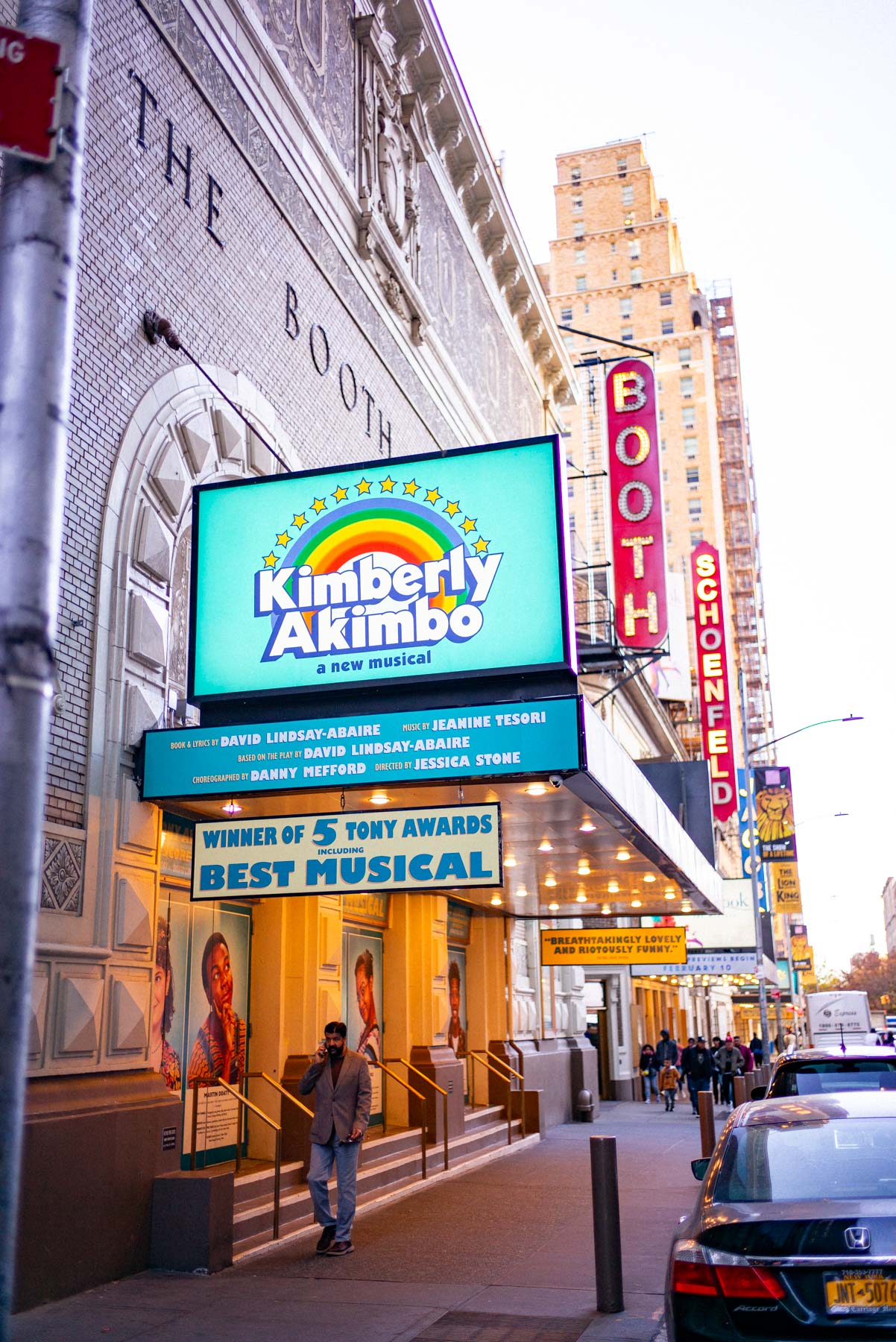
Booth Theatre · Theater District
The coat conversation
Let me be blunt. You need two coats, not one, and you need to buy at least the first one in August before the good stuff sells out.
Coat one is your everyday transitional coat. A wool overcoat, a heavier trench, a nice structured jacket. Something you can wear over a sweater in forty-five degree weather and not die. This is the coat you will actually live in from mid October through December, and again in early spring. Buy this one first. The mistake I made was waiting until I was cold, at which point I panic-bought the first warm thing I saw in a store on Fifth Avenue, which was the wrong color, the wrong length, and priced for tourists having an emergency.
Coat two is your deep-winter armor, and you can wait on this one until later. A proper insulated parka for January, when the wind off the Hudson feels personal. You do not need it in August. But you should know it is coming, so you don’t blow your entire coat budget on the pretty transitional one. The full deep-winter layering system, the one that actually keeps you warm at fifteen degrees, lives in my guide to surviving your first NYC winter, so I’ll keep this to the fall timing.
 west-village-tree-lined-street.jpg
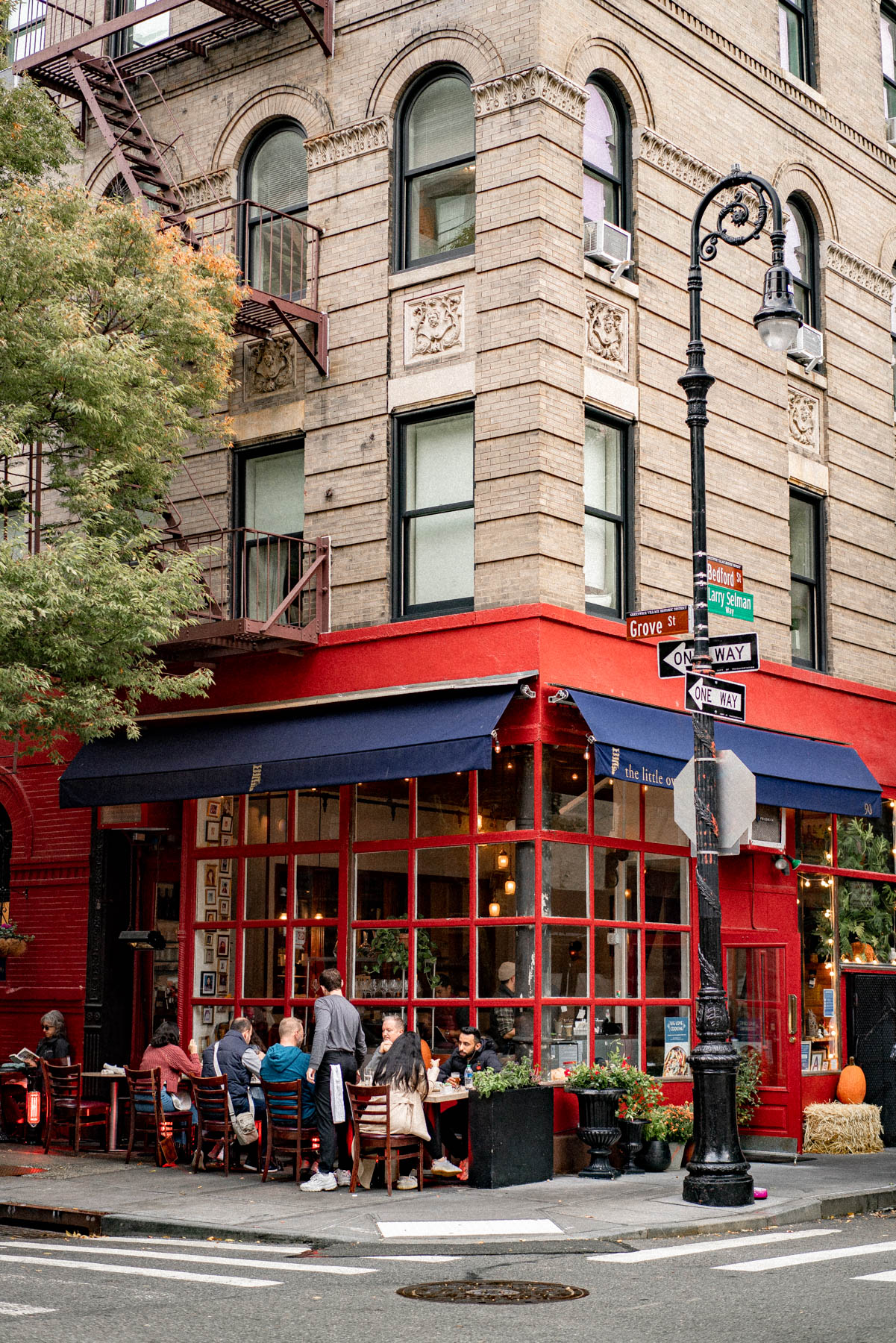
The Little Owl · West Village
One more thing. New York apartments run either arctic or Saharan, often within the same building, so layering beats one heavy coat every time. I swear by a system. A good base layer, a real sweater, and a coat you can open. You will be peeling things off the second you walk into a warm restaurant or a packed train, and putting them back on the second you step outside. This is just life here from November on.
The boots that actually matter
Those white sneakers I loved? Destroyed by December. Salt-stained, soaked, gray. New York in the wet months eats canvas and suede for breakfast.
Here is what actually works. One pair of waterproof-ish leather boots or Chelsea boots with a real sole, something with a bit of tread, because the crosswalks turn into ankle-deep slush lakes and there is always, always one flooded corner between you and the subway. And, if you can swing it, a genuinely warm pair for the deep freeze. I found that out standing at a bus stop in February in fashion boots with the structural integrity of a cracker.
Buy the everyday pair in fall, before you need them. The worst time to shop for boots is the exact day it first snows, when every reasonable human in the city has the same idea and the good sizes vanish. Get ahead of it in October and you will feel smug all winter.
 nyc-in-the-rain-1002450-1.jpg
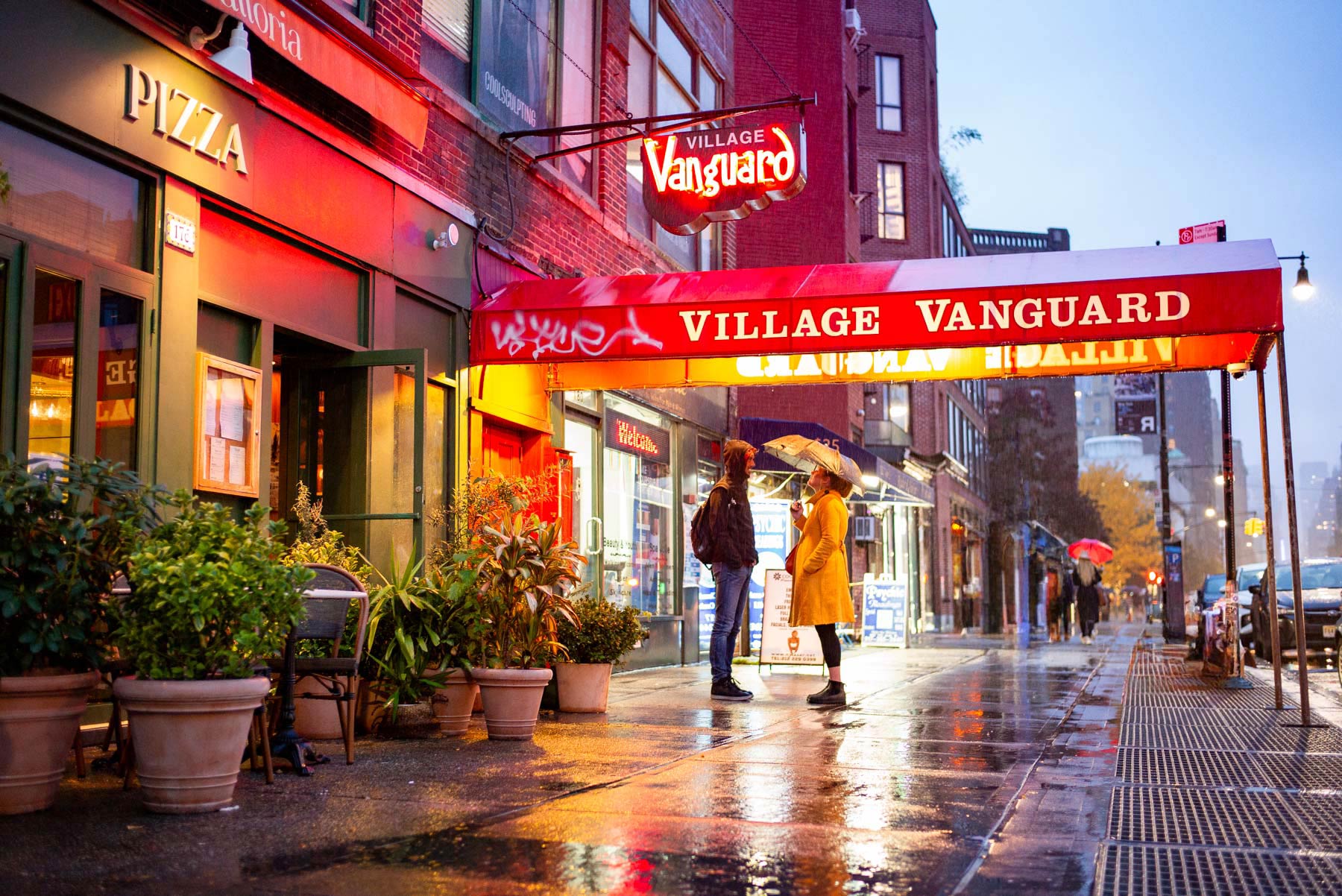
Village Vanguard · Greenwich Village
The radiator reality
Okay. This is the section I most wish I’d had.
Most older New York apartments have steam radiators, and if you have never lived with one, you are in for a surprise. They are loud. They clang, hiss, and knock, sometimes at three in the morning, and the first time it happens you will genuinely think a pipe is about to burst. It is not. That is the sound of a hundred-year-old heating system doing its thing. You get used to it. Sort of.
They are also, frequently, way too hot. Half the city fights to get heat while the other half sleeps with the windows cracked in January because their apartment is a sauna and there is no thermostat, just an on-and-off valve and a prayer. There is a NYC heat law behind all this (sixty-eight degrees by day, sixty-two overnight, October first through May thirty-first, with 311 as your recourse), and I get into the heat law and the rest of the radiator wars in surviving your first NYC winter.
One small piece of fall prep worth doing now. Grab a cheap indoor thermometer. When you can actually see your apartment sitting at fifty-nine degrees, and not just feel cold and cranky, a 311 complaint has teeth, and if your building overheats instead, you’ll know to keep a small fan on hand for the radiator months.
The apartment stuff to handle in August
A fall move gives you one real advantage. You have a few warm weeks to set up before the weather forces you inside. Use them.
Get a decent rug if your place has hard floors, because in an old building the cold comes straight up through them and a bare floor in January is genuinely brutal on the feet. Figure out your window situation early. Older single-pane windows leak heat and let in a shocking amount of street cold, and if yours are drafty you will want a plan before it matters. Sort out your bedding while you are at it. That summer duvet is not going to cut it, and there is a specific, cursed week in late October where you wake up cold at 4am and realize you own nothing warm enough to sleep under.
If you are still in the middle of the move itself, or agonizing over the lease, I wrote a whole piece on what nobody tells you before you sign a lease in NYC, including the questions to ask about heat and old windows before you commit. Ask them in August. Your January self will thank you.
 nyc-coffee-08892.jpg
What to actually wear, week to week
Fall dressing in New York is trickier than the seasons back home, because your day spans wildly different temperatures. You leave in the crisp forties, it hits the low sixties by lunch, and you are freezing again by the time you head home in the dark. Layering is not a style choice here. It is survival.
My honest fall uniform, refined over five years. A tee or thin sweater, a heavier cardigan or overshirt, and the transitional coat, plus a scarf I can stuff in my bag when the afternoon warms up. A scarf, genuinely, is the highest-leverage thing you can carry. It takes up no space, and it turns a “too cold” coat into a warm one. I am never without one from mid October on.
If you want the full breakdown of how NYC weather messes with your closet across the seasons, my guide to what to wear in NYC in spring covers the same layering logic in reverse, and honestly spring and fall dress almost identically here. Same wild temperature swings, same “why did I trust the morning weather” energy.
 Tavern-on-Janes-1006079.jpg
Tavern on Jane · West Village
The part that makes all the prep worth it
Here is what I did not understand my first fall, when I was too busy being cold to enjoy anything. New York in autumn is spectacular, and the whole point of the coat and the boots and the radiator knowledge is that they get you outside to actually experience it.
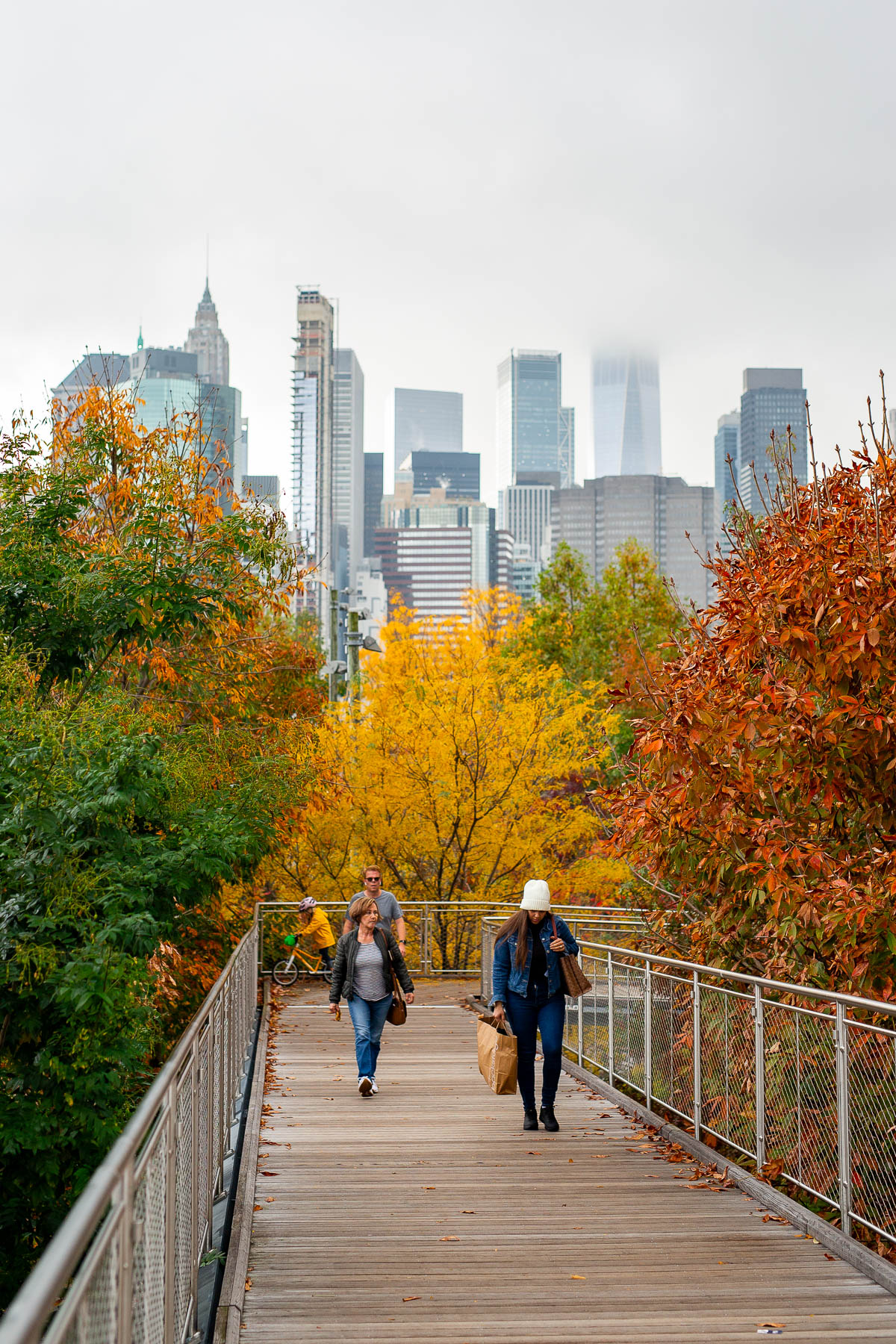
The parks turn. Central Park’s foliage peaks late October into early November, and a slow walk through the Ramble or up along the Mall when the leaves are going gold is one of the great free pleasures of living here. Brooklyn Bridge Park lights up with color along the waterfront. The whole city smells like cold air and roasting nuts and, faintly, the subway, and I mean that as a compliment.
 brooklyn-bridge-park-fall.jpg
Brooklyn Bridge Park · Brooklyn Heights
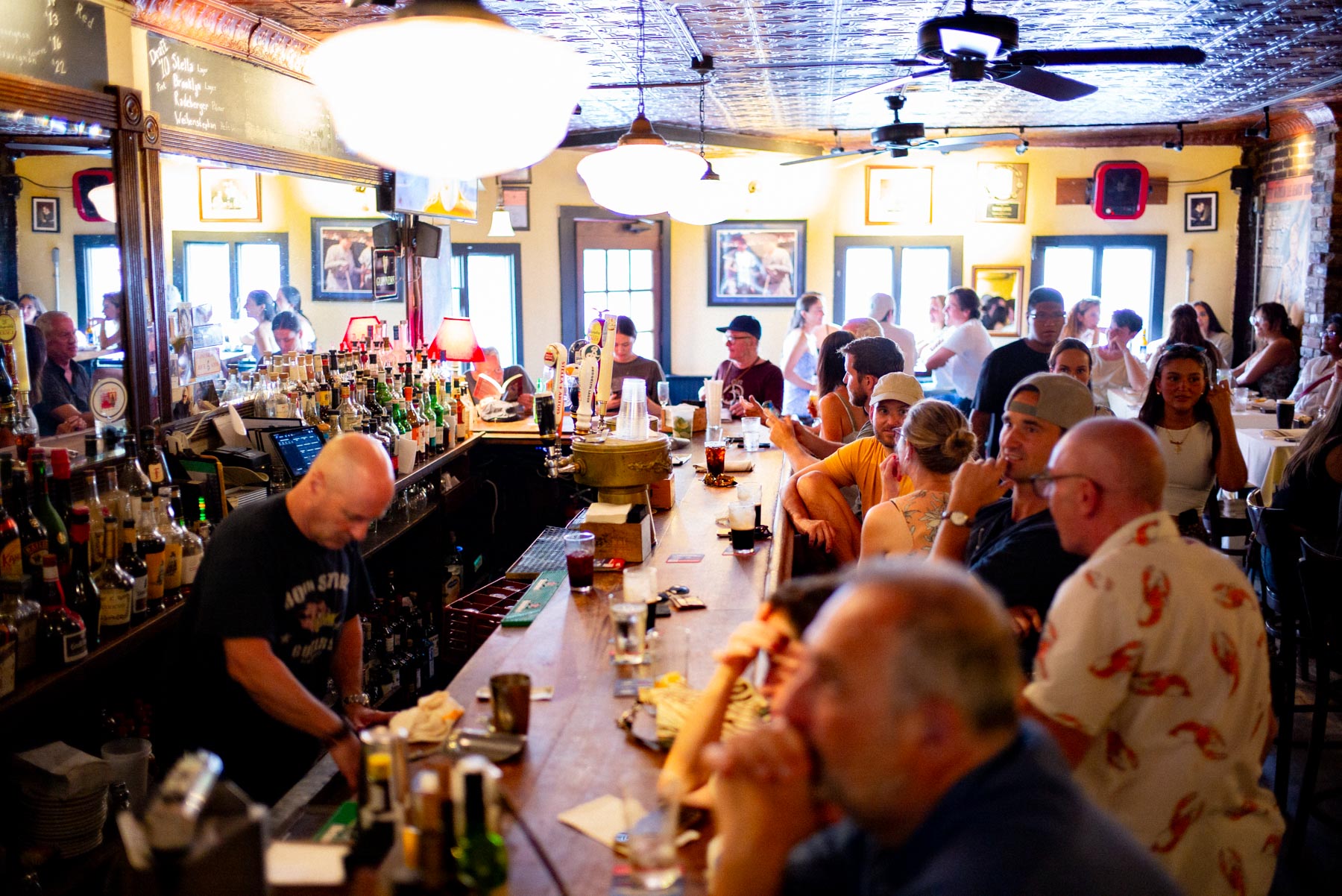
This is also cozy-bar season, the single best reason to move here in the fall. The rooftops close and the small, warm, dark places come into their own. A candlelit corner, a good glass of wine, the windows fogging up while it rains outside. If that is your speed, my roundup of NYC spots most people never find has a few of the ones my husband and I keep going back to when the weather turns.
And if you want to know how the locals actually behave when it gets cold, where we eat, where we hide, how we talk about the city in winter, I put a lot of that into what I actually tell friends visiting for the first time. Fall is when New York stops performing for tourists and starts being a place people live. You get to be on the inside of that. It is the best part.
The short version, if you are moving next month
Buy the transitional coat and the everyday waterproof boots in August, before the good ones sell out and before you are cold enough to panic-buy. Learn the heat law now. Heat season is October first to May thirty-first, sixty-eight degrees by day, sixty-two overnight, and 311 is your friend if your landlord slacks. Expect the radiators to be loud and probably too hot. Get a rug, warmer bedding, and a scarf you never take off. And remember the clocks fall back November first, so the dark comes early. Plan something cozy for that first pitch-black evening. You will need it.
Do all of that in the warm weeks, and your first New York fall will be the one where you actually get to enjoy the city instead of just enduring the weather. Which is, honestly, the whole reason to move here in the first place.
Enjoy the gold weeks,
Antonina