
Here’s the thing about Central Park. It’s massive. And most visitors end up seeing about 10% of it because they walk in from the south, hit Bethesda Fountain, take a photo at Bow Bridge, and call it a day. That’s fine. Those spots are beautiful. But there is so much more. And some of the most famous spots are honestly not worth the crowds, while some of the quieter corners are genuinely magical. So here’s my honest Central Park guide from someone who walks it like it’s her backyard. Because it kind of is. Let’s jump in!
The Basics You Need to Know
Central Park runs from 59th Street (Central Park South) to 110th Street (Central Park North), and from 5th Avenue on the east side to Central Park West on the west. It’s about 2.5 miles long and half a mile wide. The southern half (below 72nd Street) is where most tourists congregate. The northern half is quieter, wilder, and in my opinion, more beautiful.
The park has numbered lamppost markers on every path. The first two digits tell you what cross-street you’re near. So if you see lamppost 7403, you’re near 74th Street. This is the single most useful navigation tip I can give you. The park paths curve and wander and you will get turned around. The lampposts will save you.
There are entrances every few blocks on all four sides. Most people enter from the southeast corner at 59th and 5th (near the Plaza Hotel) or from the south at Columbus Circle (59th and Central Park West). But you can enter anywhere and honestly, entering from a less popular entrance means you start in a less crowded area.
The Parts That Are Absolutely Worth Your Time
These are the spots I genuinely love. The places I take friends, the places I go alone when I need the city to feel quiet, the places that remind me why I live here.
Bethesda Terrace and Fountain
Mid-park at 72nd Street. Enter from either side and follow the Mall south.
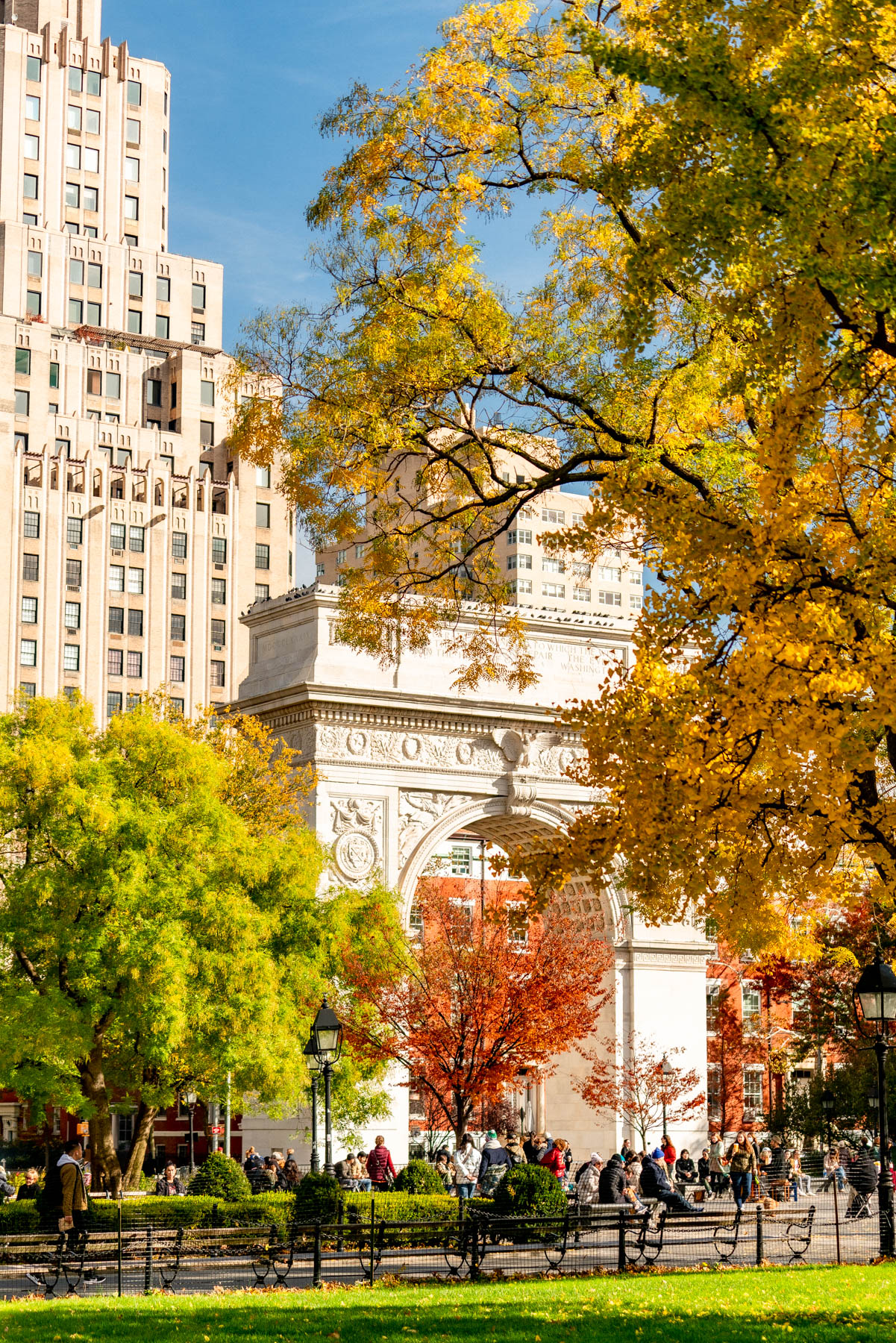 Best-Parks-NYC-01654.jpg
Washington Square Park · Greenwich Village
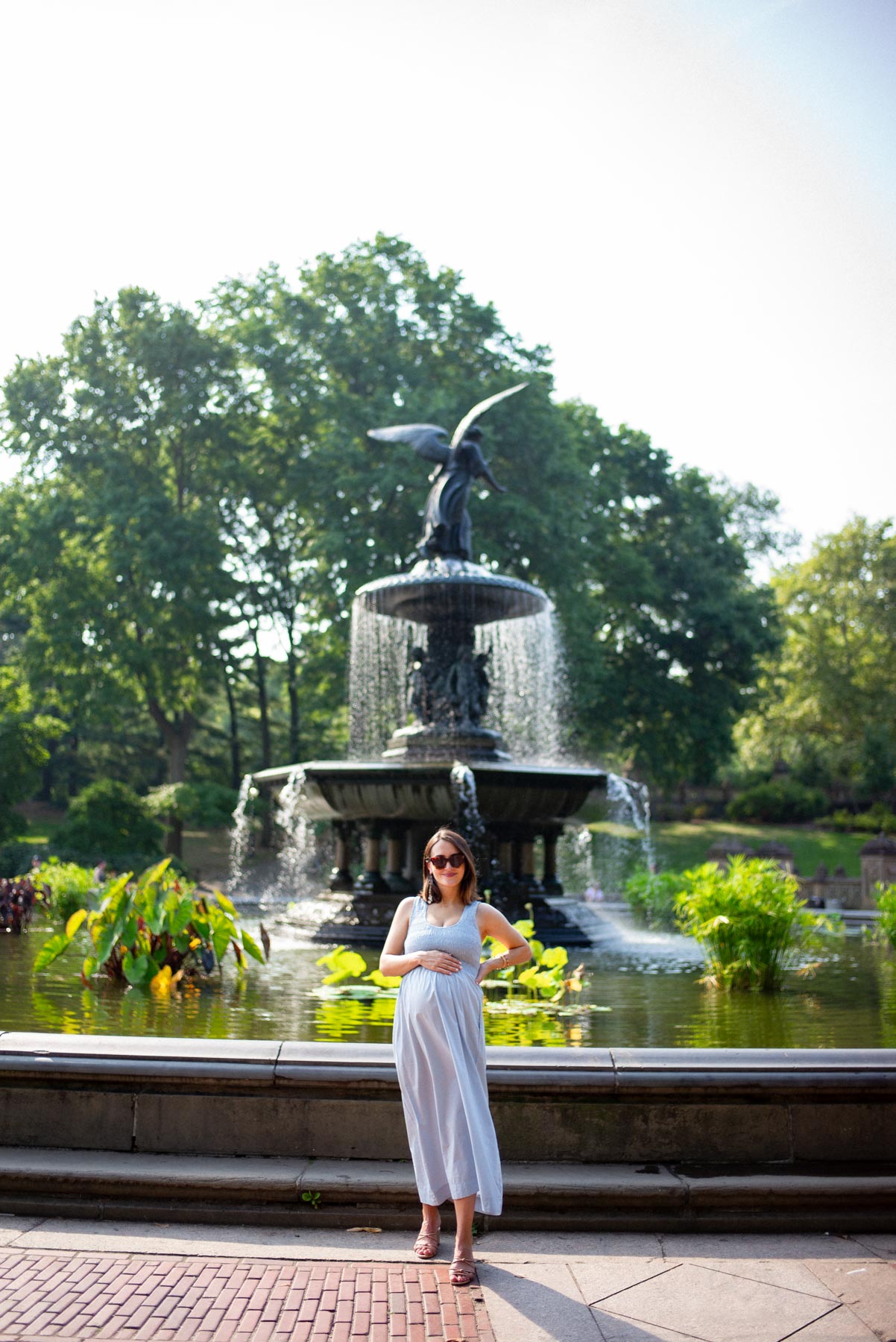
Yes, it’s the most famous spot in the park. Yes, it will be crowded. And yes, it’s worth seeing anyway. Bethesda Fountain is one of the most beautiful pieces of public art in New York City. The Angel of the Waters statue on top was designed by Emma Stebbins in 1868 and it’s stunning from every angle. But the real show is the terrace itself. The tiled arcade underneath has incredible Minton tile ceilings that most people walk through without looking up. Look up.
The best time to visit is early morning, before 9 AM on weekdays. You might have the whole fountain to yourself. I’ve sat on the edge of that fountain at 7 AM on a Wednesday in October and it was one of the most peaceful moments I’ve had in this city.
The Ramble
Mid-park between 73rd and 78th Streets.
 dearest-Central-Park-fALL-2474.jpg
Bow Bridge · Central Park
The Ramble is my favorite part of Central Park and I think it’s the most underrated. It’s 36 acres of dense, winding woodland paths that feel absolutely nothing like Manhattan. You’re surrounded by trees so thick you can’t see the buildings. The paths twist and loop and you genuinely feel like you’ve wandered into a forest. Which is exactly the point. Frederick Law Olmsted designed it to be a wild, naturalistic escape from the city grid.
It’s also one of the best birdwatching spots on the East Coast during spring and fall migration. I’m not even a serious birder and I’ve seen some incredible things here. Red-tailed hawks, woodpeckers, warblers in every color. Bring binoculars if you have them. And just wander. Get a little lost. That’s the whole point.
The North Woods
From about 101st to 110th Streets on the west side.
 Central-Park-fALL-2525.jpg
Bow Bridge · Central Park
This is the part of Central Park that most tourists never see, and it’s the part that feels the most like actual wilderness. There are streams, waterfalls (small ones, but still), rocky outcrops, and dense forest canopy. The Loch is a stream that runs through ravines and under rustic stone bridges and it’s genuinely one of the most beautiful things in the park.
I walk through the North Woods regularly and I almost never see large crowds. On a weekday morning, you might walk for 20 minutes without passing another person. In Manhattan. It’s remarkable. If you have the time and energy to walk up past 100th Street, do it. You’ll see a completely different side of Central Park.
Bow Bridge
Mid-park at about 74th Street, connecting Cherry Hill to The Ramble.
 Maternity-Shoot-Central-Park-1007015.jpg
Bethesda Fountain · Central Park
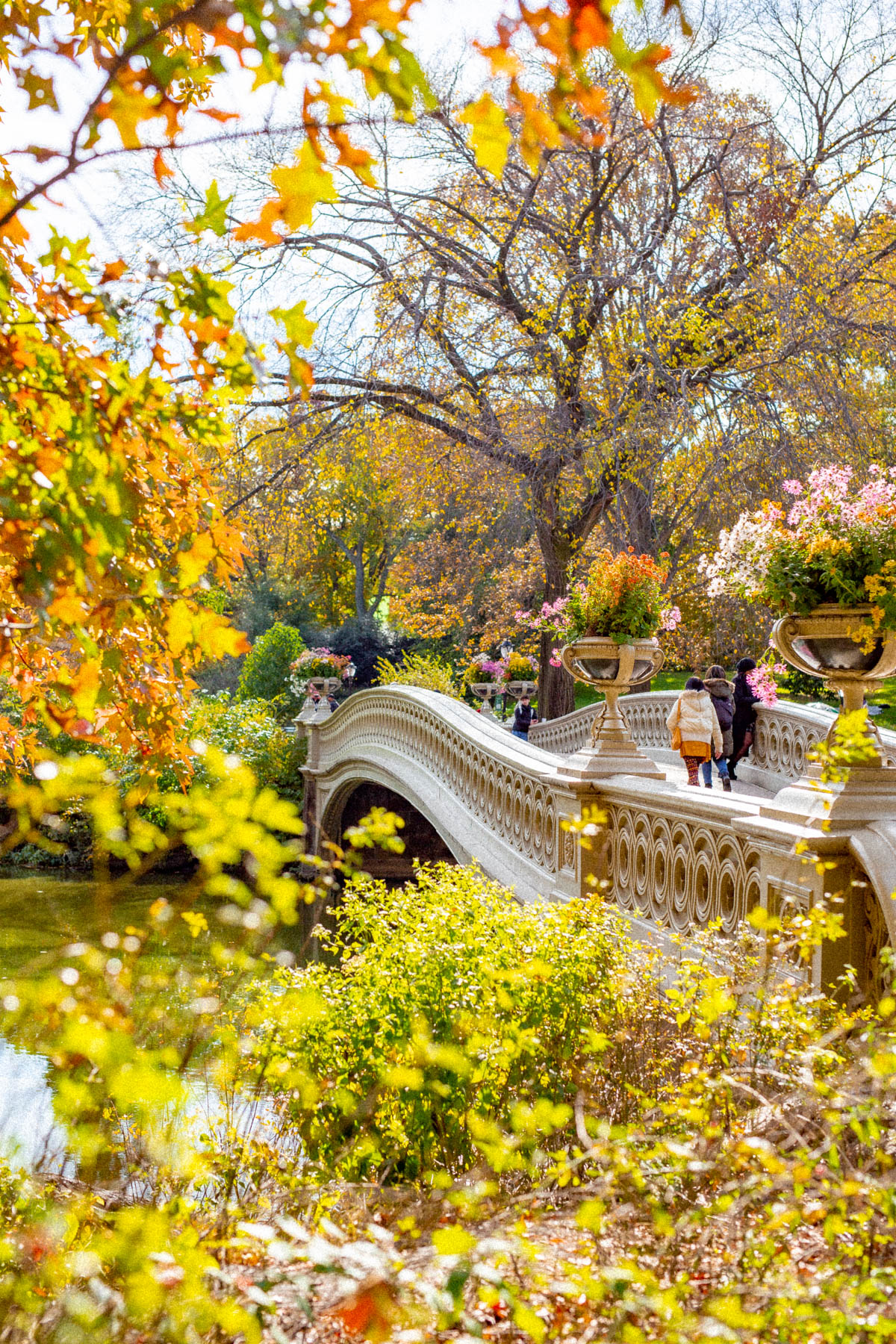
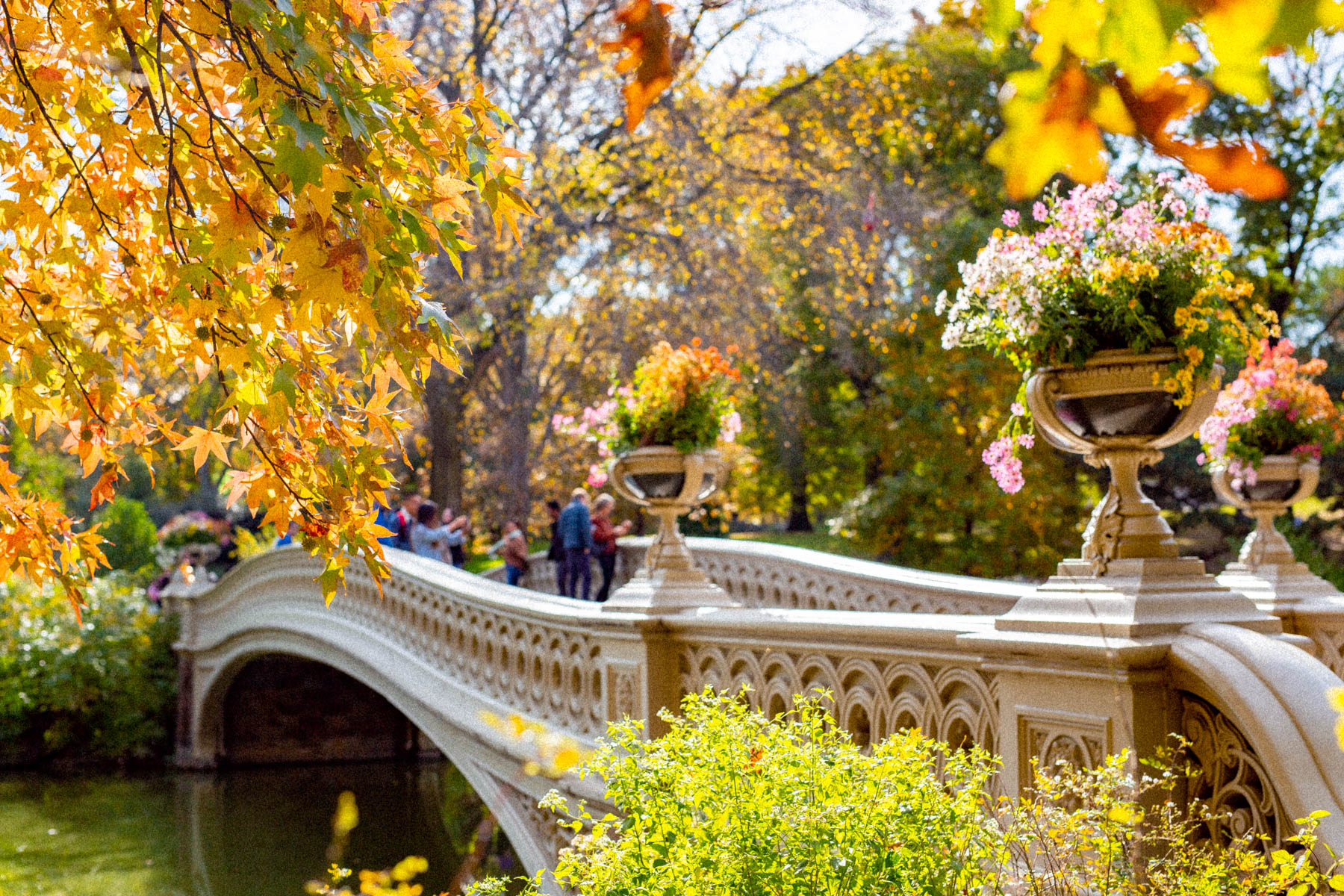
Bow Bridge is the most photographed bridge in the park and in the fall it’s absolutely breathtaking. You’re standing on a cast-iron bridge over the lake with golden and red trees reflected in the water on both sides. It’s been in approximately 400 movies and it deserves every one of them.
It is crowded. Almost always. But it’s worth walking across once, especially in October when the foliage is at its peak. If you want a quieter bridge experience, Bank Rock Bridge (just north of the Bow Bridge, near 77th Street) is almost as pretty and has a fraction of the crowds.
Belvedere Castle
Mid-park at 79th Street.
Belvedere Castle sits on Vista Rock, the second-highest natural point in the park, and the views from the top are spectacular. You can see Turtle Pond below, the Great Lawn stretching north, and the Midtown skyline peeking over the trees to the south. It’s free to enter and there’s a small nature exhibit inside.
I love this spot because it’s one of the few places in the park where you get real elevation. You feel above the park instead of inside it. Go in the morning for the best light and fewer crowds. The terrace on the south side is the photo spot.
Conservatory Garden
Enter at 5th Avenue and 105th Street.
 Central-Park-fALL-2649.jpg
Central Park · Central Park
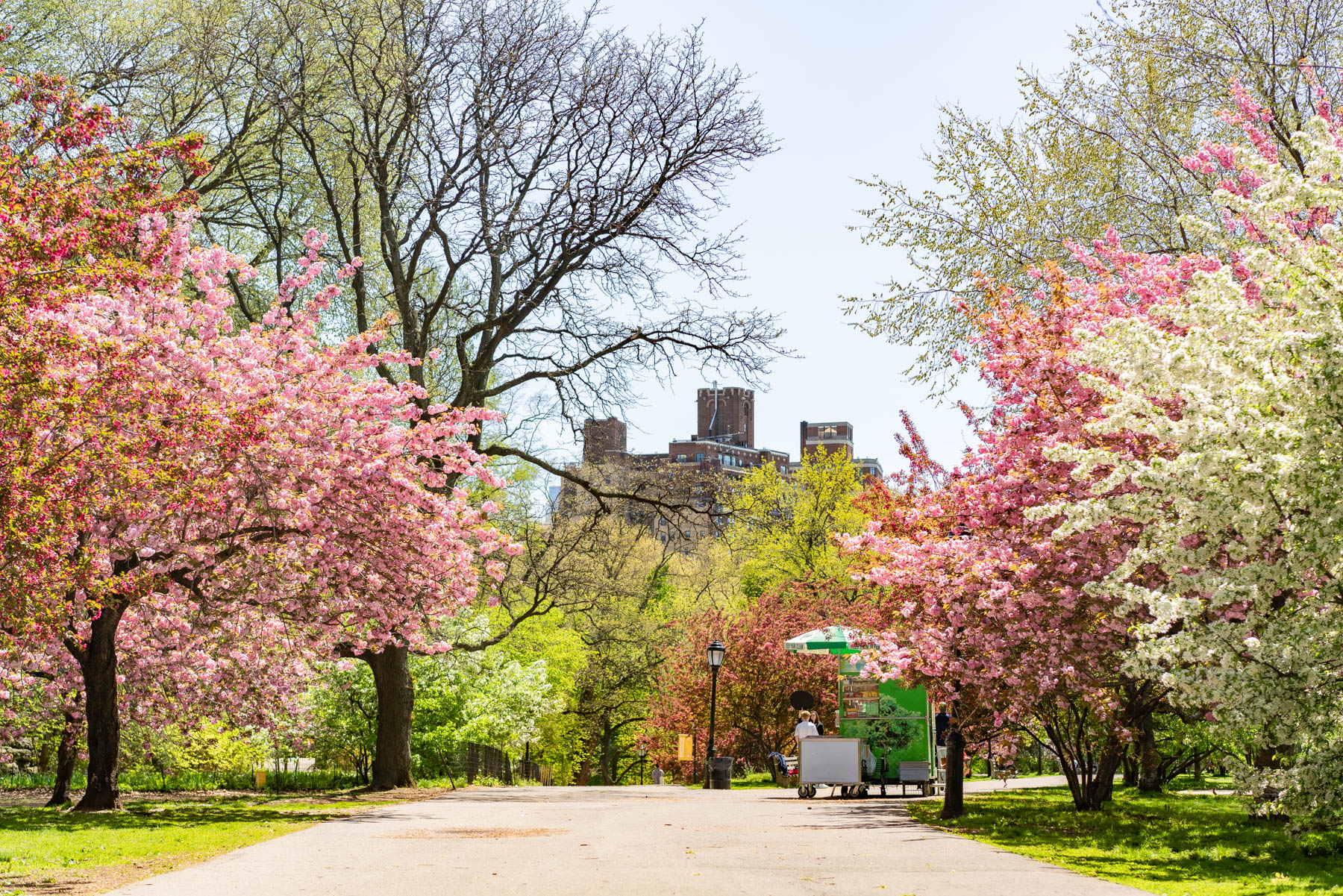
This is Central Park’s only formal garden and it’s one of the most beautiful, peaceful places in all of New York City. Three sections (Italian, French, and English) with manicured gardens, fountains, and a wrought-iron gate entrance that makes you feel like you’re entering a secret estate. In spring, the crabapple allée in the English garden is covered in pink blossoms and it’s genuinely one of the prettiest things I’ve ever seen.
Conservatory Garden gets a fraction of the visitors that the southern park attractions get. On a weekday afternoon, you might share it with a handful of people reading on benches. It’s the kind of place that makes you forget you’re in the middle of the biggest city in America.
The Reservoir (Jacqueline Kennedy Onassis Reservoir)
Between 85th and 96th Streets.
The Reservoir takes up a huge chunk of the park and the running/walking path around it (about 1.6 miles) has some of the best skyline views you’ll find anywhere. You’re at the center of the park, slightly elevated, with water in front of you and the skyline of either the Upper East Side or Upper West Side framing the view. In the fall, the trees around the reservoir turn gold and the reflection on the water is incredible.
Even if you’re not a runner, walking the reservoir loop is a great way to see the park from a different perspective. The views change as you walk around. Go counter-clockwise for the best light in the afternoon.
The Parts You Can Skip (Or at Least Manage Your Expectations)
I’m not saying these are bad. I’m saying they might not be worth your limited time if you’re choosing between them and the spots above.
Strawberry Fields
I know. This is a controversial take. The John Lennon memorial at Strawberry Fields (72nd Street on the west side) is meaningful and I understand why people want to see it. But in practice, it’s a small mosaic that says “Imagine” on the ground, surrounded by tourists taking photos, and usually someone playing Beatles songs on a guitar for tips. You can see the whole thing in about 90 seconds. If you’re a huge Beatles fan, go. If you’re not, walk through quickly on your way to somewhere else and you won’t feel like you missed anything.
 Best-Parks-NYC-05302.jpg
Central Park · Central Park
The Central Park Zoo
It’s small. Really small. And expensive for what it is ($13.95 for adults). The sea lion feeding is fun and the snow leopards are cool. But if you’re choosing between the zoo and spending that hour exploring the Ramble or the North Woods, I’d pick the park every time. If you’re traveling with small kids who love animals, the zoo makes more sense. For everyone else, I’d skip it.
The Carousel
The Central Park Carousel at mid-park near 64th Street is charming to look at and fun for kids. For adults without kids, it’s a $3.50 ride that lasts about 90 seconds. You can admire it from the outside and move on.
 Wollman-Rink-NYC-02624.jpg
Wollman Rink · Central Park
The Mall and Literary Walk
The Mall is a long, elm-tree-lined promenade that leads to Bethesda Terrace. It’s pretty. But it’s essentially a wide path with statues of writers on both sides, and it’s usually packed with portrait artists, caricature sketchers, and people selling things. Walk through it once on your way to Bethesda, enjoy the trees, and keep moving. It doesn’t need more than a few minutes.
Seasonal Tips from Someone Who’s Seen Them All
Spring (April and May). This is the park’s best season. Cherry blossoms around the reservoir and near the Bethesda Fountain. The Conservatory Garden explodes with color. Everything is green and fresh and the whole park feels alive. Go as much as you can.
Summer (June through August). Hot. Really hot. But the shade under the trees in the Ramble and North Woods makes it bearable. SummerStage has free concerts in the park (near 72nd Street on the east side). Shakespeare in the Park at the Delacorte Theater is one of the great New York experiences (free tickets, but you have to enter the lottery or wait in line). Avoid open sunny areas between noon and 3 PM unless you want to melt.
Fall (September through November). The foliage in Central Park rivals anything in New England and I will die on this hill. Peak color is usually late October into early November. The best spots for fall foliage are the Ramble, around the Reservoir, and the Pilgrim Hill area near 72nd Street on the east side. Bring a camera. Bring multiple cameras. It’s that good.
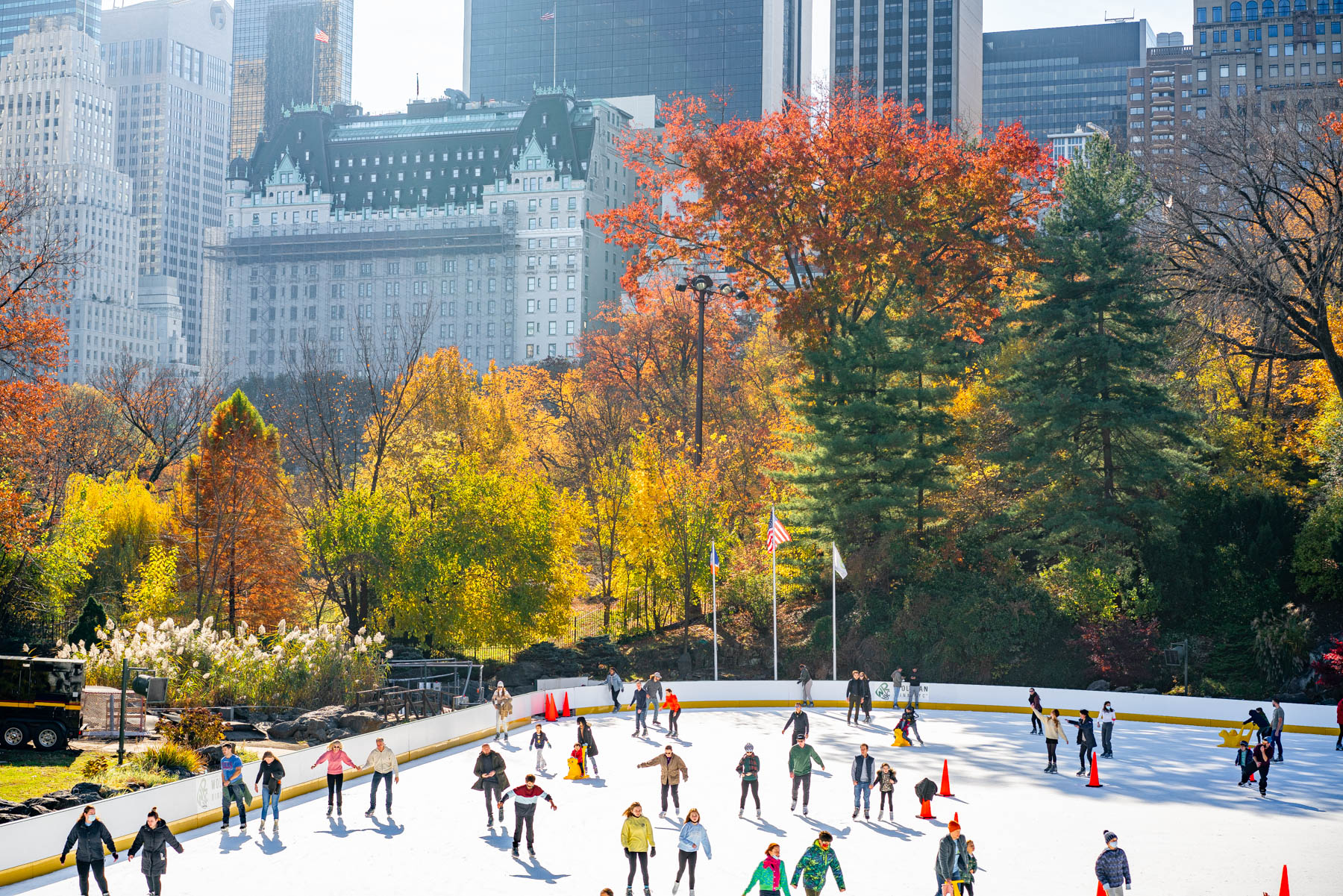
Winter (December through February). The park is beautiful under snow, especially right after a snowfall when everything is still white and quiet. The skating rinks at Wollman Rink (south end) and Lasker Rink (north end) are both open. Wollman is the famous one with the skyline backdrop. Lasker is cheaper, less crowded, and honestly more fun. The Conservatory Garden under a light dusting of snow is magical.
My Perfect Central Park Day
If someone asked me to plan the ideal day in Central Park, here’s what I’d do.
Enter from the west side at 72nd Street and Central Park West. Walk to Bethesda Fountain (you’ll pass Strawberry Fields on the way, so you can glance at it without making a special trip). Spend a few minutes at the fountain, especially the tiled arcade underneath. Cross Bow Bridge and wander into the Ramble. Get a little lost. Emerge on the east side near the Loeb Boathouse area.
Walk north to Belvedere Castle. Climb to the top for the view. Continue north past the Great Lawn to the Reservoir and walk the western half of the loop. Then head north to the North Woods and Conservatory Garden if you have the energy. Exit on the east side at 105th Street.
That’s about 3 to 4 miles of walking and covers the best parts of the park while avoiding the most crowded sections. Pack a snack. Bring water. Wear comfortable shoes (always). And give yourself at least 3 hours. You could easily spend 5.
The Bottom Line
Central Park is the best park in any city in the world and I’m not being hyperbolic. It’s beautiful, it’s free, and it changes completely with the seasons. The mistake most people make is staying in the crowded southern section and thinking they’ve seen it. You haven’t. Go north. Go into the Ramble. Find the Conservatory Garden. Walk the Reservoir loop. See the park the way New Yorkers actually see it.
And if you see someone walking through the North Woods talking to the red-tailed hawks, that’s probably me. I’m not weird. I’m just in love with this park.
FAQ
Walking the full length of Central Park from 59th Street to 110th Street takes about 45 minutes to an hour at a steady pace. But to actually explore the park properly and enjoy the major highlights, plan for at least 2 to 3 hours. If you want to see both the popular southern sections and the quieter northern areas, a half-day visit gives you the best experience.
For first-time visitors, entering at 72nd Street on either the east or west side puts you close to the best attractions including Bethesda Fountain, Bow Bridge, and the Ramble without the crowds at the southern entrances. The west side entrance at 72nd and Central Park West is my personal favorite because it gives you a direct path to Strawberry Fields and Bethesda Terrace.