

I cried because it felt like handing over my independence to a subway map I still could not read.
That was six years ago. I have not owned a car in the city since, and I am here to tell you the honest version of what that has actually been like. Not the smug version. Not the “you’ll never need one, the city is your oyster” version. The real one, with the parking math and the rental headaches and the two or three times a year I have genuinely wished I still had a set of keys.
So. Do you need a car in NYC?
No. You do not. But I want to earn that answer instead of just declaring it, because the caveats are the whole story.
The parking math is the part nobody wants to hear
Let me start with the number that ended the debate for my husband and me. A monthly parking spot in a Manhattan garage averages around $570, and that is the friendly average. In Midtown you are routinely looking at $700 or more, and the premium buildings on the Upper East and Upper West Sides will happily charge $1,000 to $1,400 a month for a space barely wider than the car itself.
Read that again. Fourteen hundred dollars. A month. To not drive the thing most days.
That is rent, in a lot of American cities. It is more than my student loan payment was. And it buys you the right to walk four blocks in the rain to retrieve a car you then have to find somewhere to park at the other end of your errand.
People always say, “But I’ll just park on the street.” Sweet summer child. Street parking exists, technically, but it comes with alternate side parking, which means twice a week in most neighborhoods you have to move your car for street cleaning or eat a ticket. That ticket runs $65 below 96th Street in Manhattan and $45 in the outer boroughs, and it is the kind of thing that quietly happens four times before you fix your habits. I have watched friends set 8 a.m. alarms, sit in their double-parked car reading their phone for ninety minutes, and call it a hobby. It is not a hobby. It is a hostage situation.
When we ran our actual monthly numbers back when we first arrived, the car line item was one of the ugliest surprises. If you want the full picture of what living here really costs, I broke the whole thing down in my real monthly cost breakdown for 2026, and I promise the parking figure is not the scary part. It is everything on top of it.
Then there is the congestion toll
As of January 2025, driving into Manhattan below 60th Street costs you a congestion toll on top of everything else. For a standard passenger car with E-ZPass it is $9 during peak hours, charged once a day. That does not sound like much until you realize it stacks on the tunnel or bridge toll you already paid to get onto the island, and the parking you are about to pay for once you arrive.
Nine dollars, plus a bridge toll, plus a garage, to sit in traffic on Canal Street. Foolish. There are cheaper and more pleasant ways to hate your life.
What replaces the car, and what it actually costs
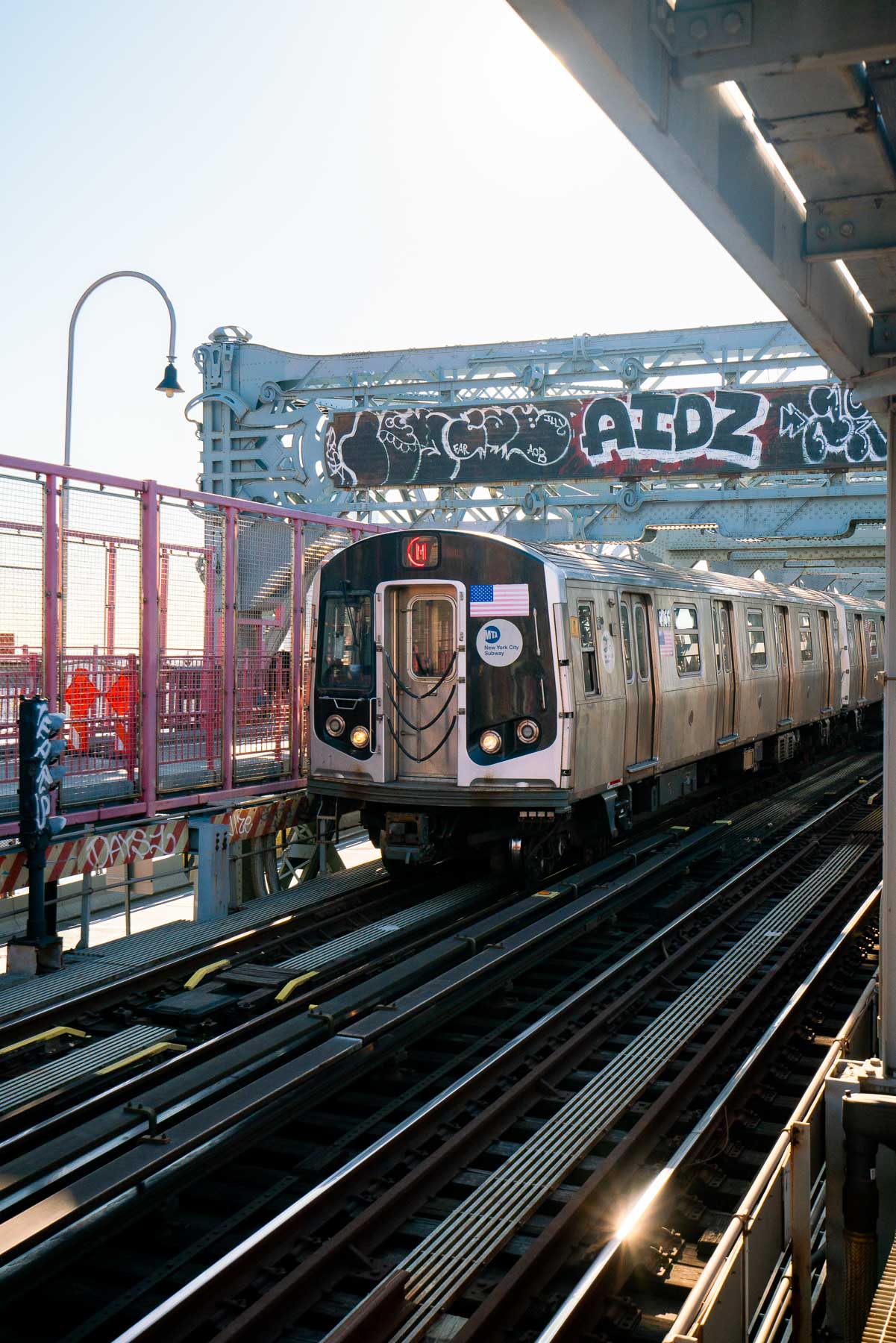
Here is the trade I made. Instead of $570 a month for parking plus insurance plus gas plus tolls plus tickets, I pay $3 a ride on the subway. That fare went up to $3 in January 2026, and yes, everyone complained, and yes, it is still one of the great deals in American transportation.
The fare is $3 a ride now, and OMNY caps you at $35 in any rolling seven-day window, after which every ride is free. That single number is why heavy weeks stop hurting, and I walk through exactly how it pencils out in the real cost of commuting in NYC.
So my transportation budget, in a heavy week, tops out around $35. Compare that to the parking spot alone and the argument is basically over.
Add walking, which I did not appreciate until I lived here. My husband and I walk more in a normal Tuesday than we used to walk in a week. That is not a wellness brochure talking. It is just what happens when the bodega, the train, and three of your favorite dinners are inside a ten-minute radius.
The Zipcar reality, because sometimes you do need four wheels
Now for the honest part. There are days you want a car, and the good news is you can rent one by the hour without owning one.
I use Zipcar. Membership is about $70 a year, or $7 a month, plus a one-time $25 application fee. If you have an IDNYC card, the annual membership is actually free, which is a genuinely good deal most people do not know about. From there you reserve a car by the hour, roughly $9 to $11 depending on the vehicle, or about $89 for a full day. Gas, insurance, and parking are baked into the rate, so the sticker price is the real price, which is more than I can say for renting from a traditional counter.
Fair warning though. Zipcar works beautifully right up until the moment everyone else in your neighborhood wants a car too. The Saturday morning of a long weekend, the last car in a five-block radius will already be reserved by 7 a.m. by someone more organized than me. I found that out the Friday before a Memorial Day beach plan that turned into a train plan very quickly.
The other honest note. For a single one-off day, Zipcar is a bargain. For anything longer than two days, do the math against a regular rental car, because the daily rate stops being magic once you are into multi-day territory. This is the kind of practical thing I wish someone had told me before I moved, and it is exactly the flavor of advice I collected in everything nobody tells you before you sign a lease.

New York Transit Museum Holiday Nostalgia Train
The trips that tempt you
This is where the caveats live. There are moments the carless life genuinely tests you.
The IKEA run. The move (though honestly, you will hire movers, and you should). The Costco haul out to a suburb. The friend’s wedding in a town the train does not reach. The Sunday you just want to be at a trailhead by 9 a.m. without coordinating three transfers. Those are real, and I am not going to pretend a MetroCard, sorry, an OMNY tap, solves all of them.
But here is what surprised me. Most of the trips I assumed required a car do not. The Hudson Valley, which is the escape that tempts every stressed-out New Yorker around September when the light starts to change, is completely doable by train. Metro-North runs up the Hudson Line from Grand Central, and in about ninety minutes you are stepping off in Cold Spring or Beacon with a ticket that costs roughly $15 to $25. Cold Spring’s Main Street is a three-minute walk from the platform. Dia Beacon, that enormous minimalist art museum people plan whole days around, is a short walk from the Beacon station. No car. No parking. No congestion toll. Just a train, a river out the window, and a return ticket for the same price.
That trip, more than any budget spreadsheet, is what sold me. The thing I thought I was losing, the freedom to get out of the city, turned out to be sitting right there at Grand Central the whole time.
For the tempting trips that genuinely do need wheels, that is what the Zipcar day rate or a weekend rental is for. You rent the solution for the specific problem, and then you hand it back and stop paying for it. That is the whole philosophy. Own the transit pass, borrow the car.
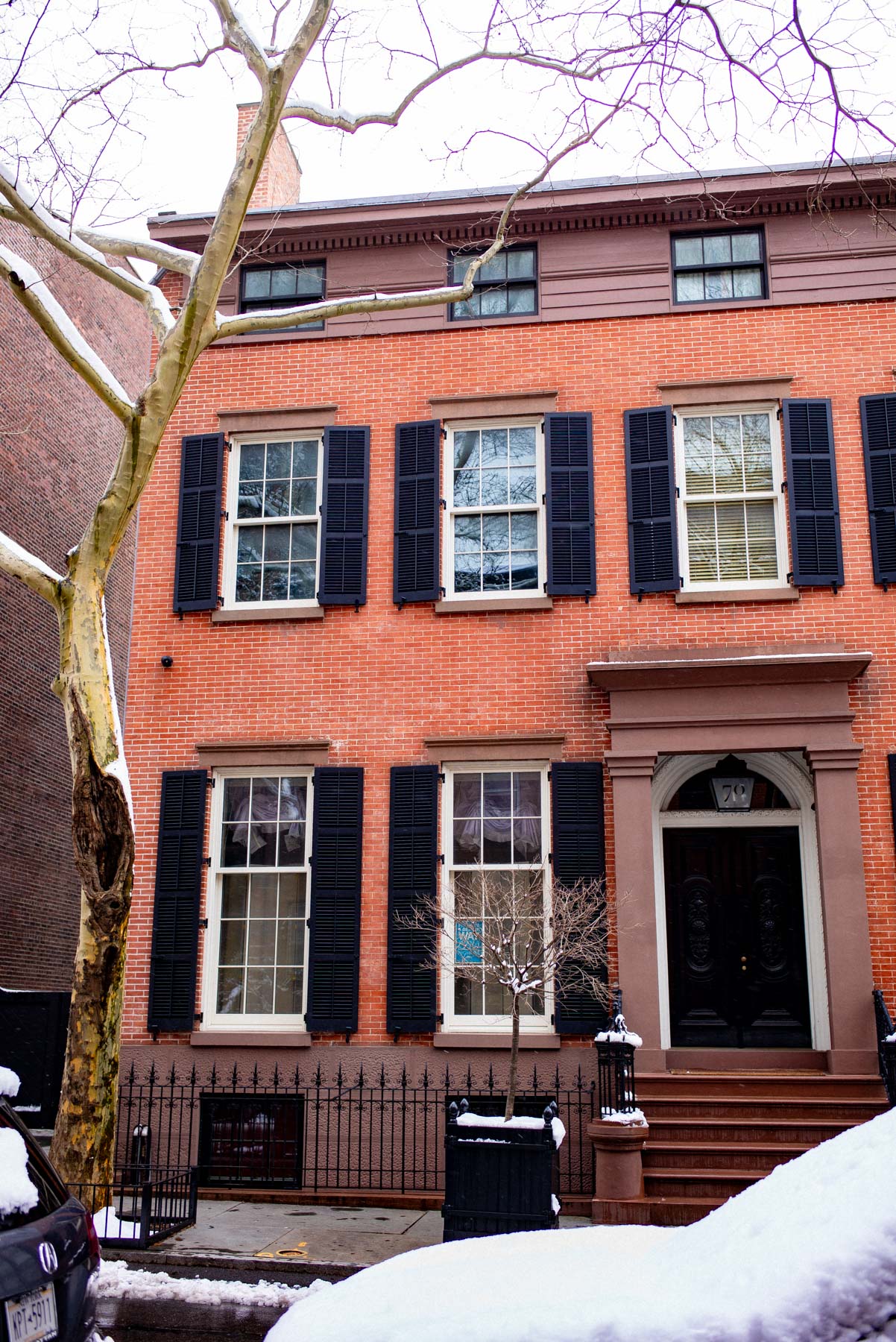
Brooklyn Heights
Who actually should keep a car
I promised you the honest version, so let me be fair to the other side. There are New Yorkers who genuinely benefit from a car, and pretending otherwise is how you get preachy content that helps no one.
If you live in a transit-thin part of the outer boroughs, deep Staten Island, the far edges of Queens, parts of the eastern Bronx, where the nearest train is a long bus ride away, a car changes your life in a way it never would in Manhattan. If you have small kids and a standing weekend routine that involves grandparents in New Jersey, a car earns its keep. If your job requires hauling equipment, obviously. And if street parking is free and realistic where you live, which it can be in the outer boroughs, the entire cost equation I laid out gets a lot friendlier.
So the real answer is not a slogan. It is geography. In Manhattan and the dense, well-connected parts of Brooklyn and Queens, a car is a luxury and often an active nuisance. Further out, it can be a genuine tool. Know which New York you are actually moving to before you decide. The neighborhood you pick decides this for you more than your budget does, which is why I spend so much time on the honest version of the search in my first-apartment survival guide.
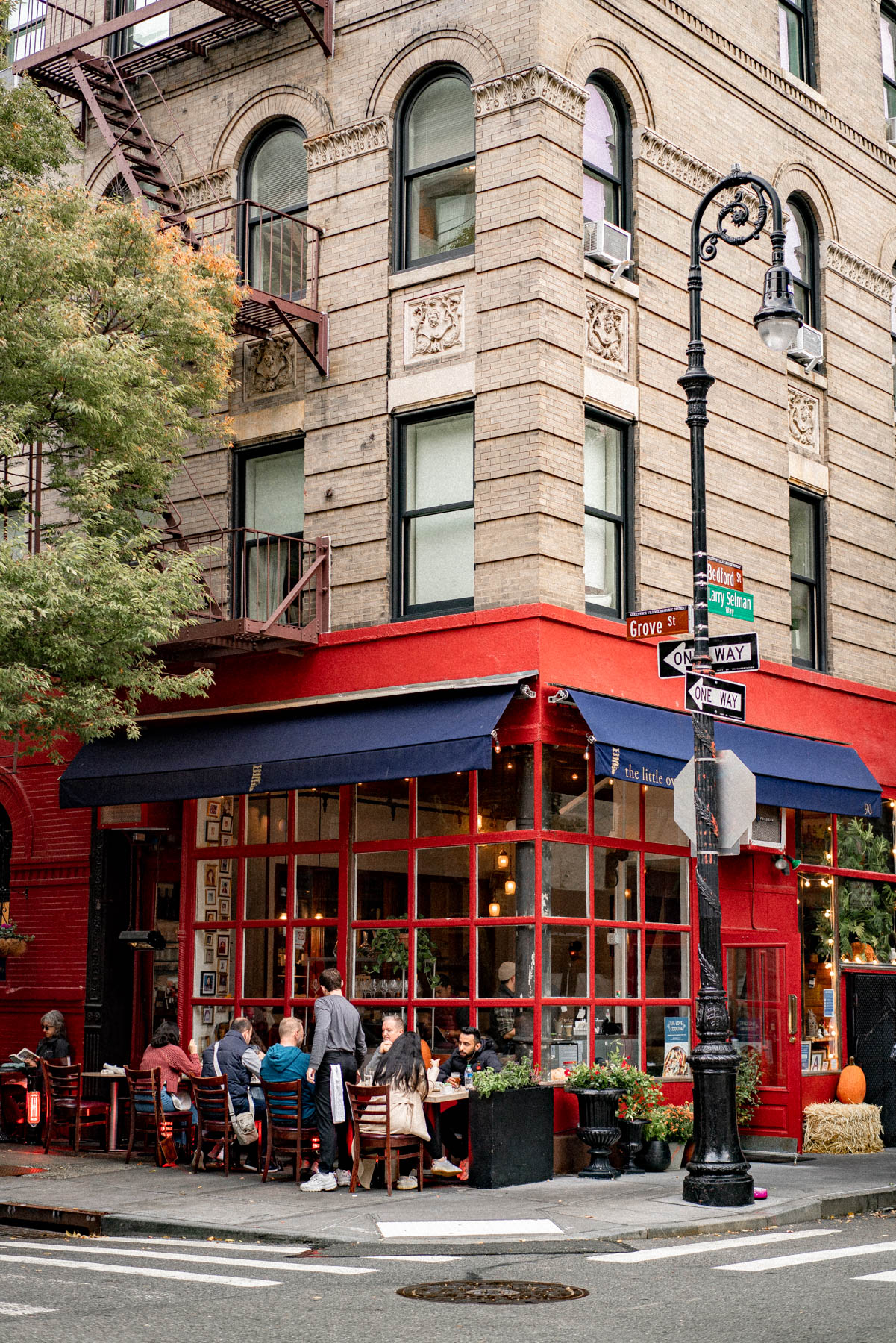
The Little Owl · West Village
The stuff I actually miss
I will not lie to you and say I feel nothing. I miss the car for the dumb, specific moments. Grocery hauls in a downpour. The 11 p.m. craving that lives one neighborhood too far. The private, radio-on, nobody-else-here quiet of a solo drive, which does not exist on a rush-hour 6 train, where you are pressed against a stranger’s backpack contemplating your choices.
But I do not miss the alarm to move the car. I do not miss the $9 toll or the mental tab I kept on gas. I do not miss circling my own block for twenty minutes at midnight, losing, and paying a garage out of spite. That version of freedom came with a leash I did not notice until I dropped it.
So, the actual verdict
No, you do not need a car in NYC. In the connected core of the city it is a bad financial deal and a daily logistical tax, and the two genuine gaps, the occasional haul and the occasional escape, are cleanly covered by an hourly rental and a Metro-North ticket.
Keep a car only if your specific corner of the city and your specific life demand it, and if it does, own that choice with clear eyes and a parking budget. For everyone else, the money you were about to spend on a garage is, frankly, a lot of dinners. Or a lot of train tickets to Cold Spring. I know which one I would pick.
If you are still in the deciding-where-to-live stage of all this, do not skip the boring logistics. The block you choose quietly decides whether you will ever want keys again, and I put the least glamorous, most useful version of that in how to actually land a no-fee apartment.
What tipped it for you, keeping the car or dropping it? I am always curious which trip is the one that tempts people back.
See you on the platform,
Antonina