
So let me tell you what six-plus years of paying New York rent taught me, and then you can decide.
The money, stated plainly
Let me give you the number first, because everything else is downstream of it. As of June 2026, the median rent in Manhattan was $5,295 a month. In Brooklyn it was $4,350. Both are up about 8 percent from a year ago, and both are records, because of course they are. That is a gap of roughly $945 every single month, or a little over $11,000 a year, for the privilege of a Manhattan zip code.
Manhattan crossed a median of $5,000 for the first time back in February. I remember reading that and laughing, not because it was funny, but because I had already lived through the version of that number that made me move to Brooklyn in the first place.
But the medians hide the real story. Those are asking rents across the whole borough, luxury towers and all. What Brooklyn actually buys you is not a smaller version of the same thing. It is often more square footage, an in-unit washer and dryer that does not require a roll of quarters and a prayer, and sometimes a bedroom with a window that faces something other than an air shaft. That last one sounds like a joke. It is not a joke.
If you want the full breakdown of where the money really goes past rent, I did the whole grim arithmetic in my real monthly cost of living in NYC in 2026 post. Rent is only the opening bid.
What Manhattan actually gives you
I do not want to be the person who moves to Brooklyn and then spends the rest of her life dunking on Manhattan. That is a specific and tiresome New York personality, and I refuse.
Manhattan gives you time. That is the real product. When you live in Manhattan, the thing you are buying with that extra $945 is minutes. Your commute is shorter. Your friends can actually get to your birthday dinner. You can walk out at 11pm and there is a bodega, a wine bar, and a stranger having a full meltdown, all within one block, which is exactly the New York you imagined before you moved here.
 dearest-Top-of-the-Rock-Views-00203.jpg
Top of the Rock · Midtown
Density does a lot of quiet work. In Manhattan you are rarely more than a few minutes from a subway line that goes where you need to go, and if the train is a mess, you walk, or you grab a bus, or you just get a coffee and wait it out. There is always a plan B. In parts of Brooklyn there is one train, and when it is down, you have a problem and a story.
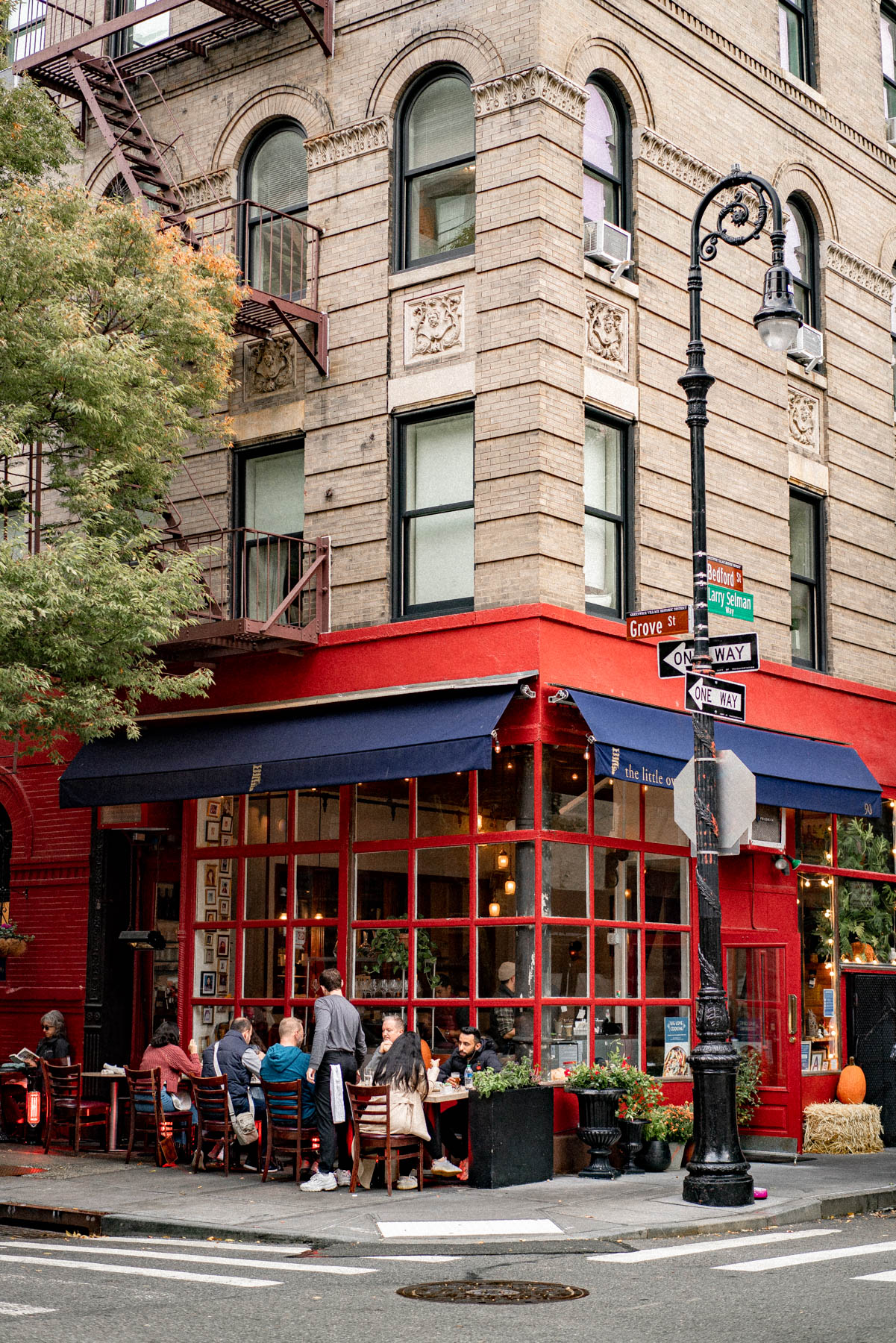
Manhattan is also where you go when you want the version of New York that shows up on postcards. The West Village on a golden afternoon, brownstones and crooked little streets and a wine bar with two tables outside. Central Park when the leaves turn. I still get a small jolt every time I come up out of the subway near Washington Square. Six years in and it has not worn off.
 west-village-tree-lined-street.jpg
The Little Owl · West Village
The honest downside. You pay for all of it, constantly, and the apartment you get for that money will humble you. My first Manhattan bedroom did not fit a full-size bed and a dresser at the same time. I chose the bed. Below a certain budget, Manhattan sells you the neighborhood and charges you rent on a closet with plumbing.
What Brooklyn actually gives you
Brooklyn gives you a life that is more yours. That is the best way I can put it.
The apartment is bigger. The block feels like a neighborhood instead of a thoroughfare. There are trees. Your coffee guy knows your order, and it is a real cafe with a real name and a real personality, not a chain wedged between two bank branches. I wrote a whole ode to my actual morning coffee spots in Brooklyn because that daily ritual is a huge part of why I fell for the borough in the first place.
 DSC04940.jpg
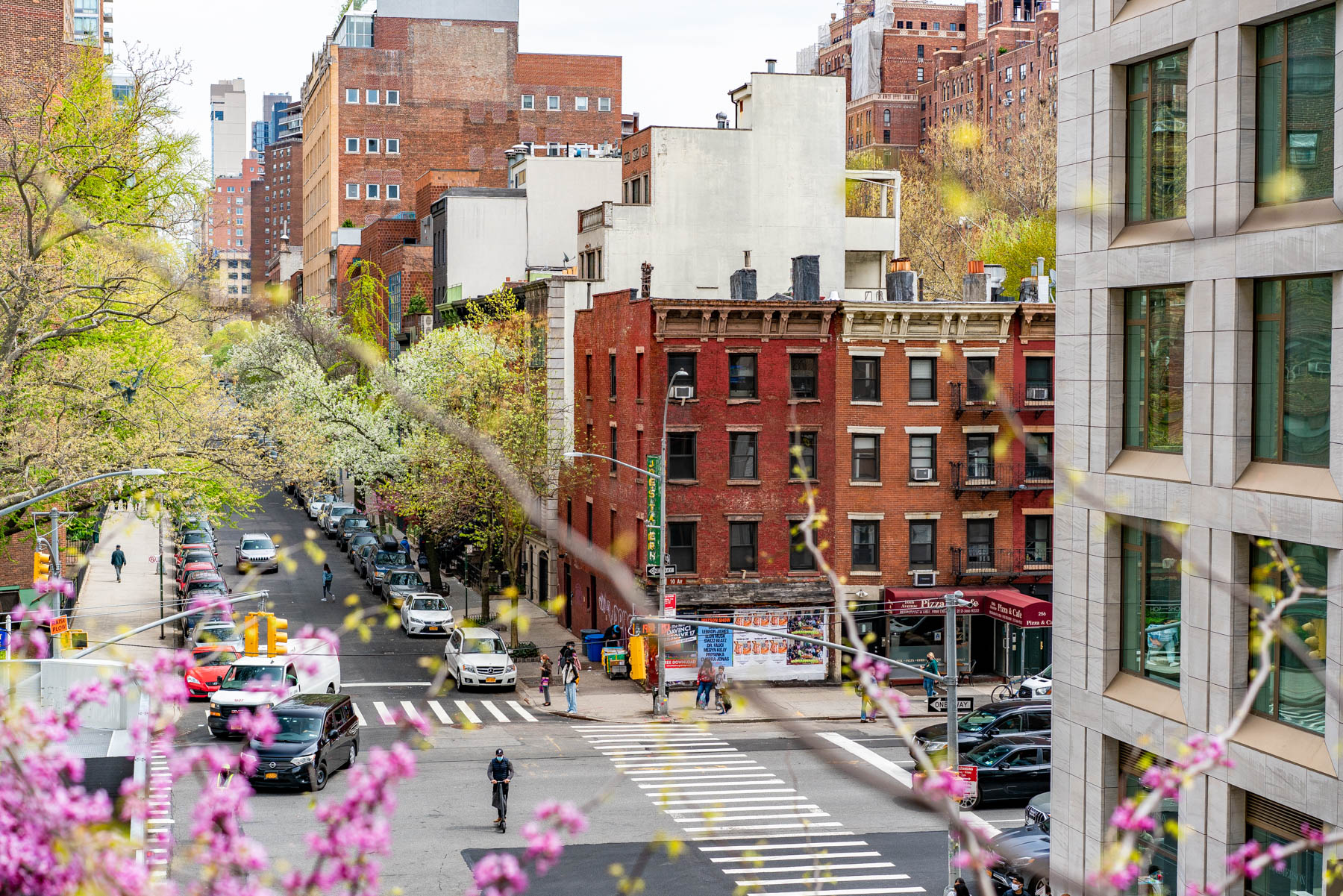
Chelsea
There is also a range in Brooklyn that Manhattan simply does not have anymore. Brooklyn Heights is old money and quiet. DUMBO is cobblestones and that impossible Manhattan Bridge view. Williamsburg is loud and stylish and a little exhausting in a way I still enjoy. Head deeper and you find Ditmas Park’s front porches and Bay Ridge’s water views, and rents that finally start to feel like numbers a human being could carry.
 dumbo-waterfront-manhattan-view.jpg
Glide at Brooklyn Bridge Park · DUMBO
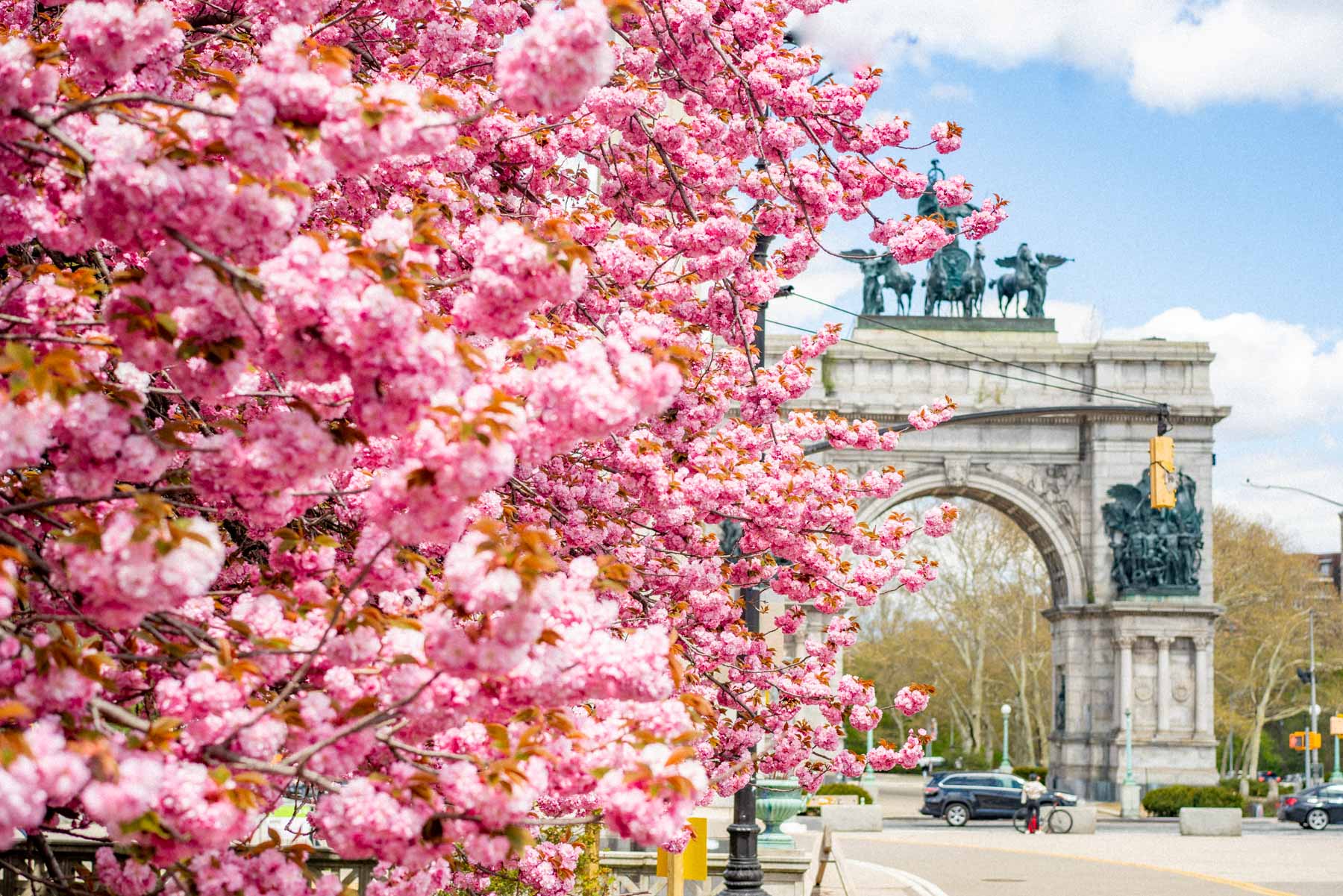
Spring in Brooklyn does something to me too. When the cherry blossoms hit in Prospect Park and the Brooklyn Botanic Garden, the whole borough softens for about ten days and I forgive it everything.
 Green-Wood-Cemetery-09993.jpg
Grand Army Plaza · Grand Army Plaza
The honest downside. Distance is real, and it compounds. That extra $945 you saved gets partially eaten by time, especially if you land somewhere with only one train. My husband and I once lived a spot where a signal problem could turn a 30-minute commute into an hour, and there was nothing to do but stand on a hot platform and accept it. Some nights, getting home from Manhattan feels like an expedition. You save on rent and you pay in minutes. Nobody puts that on the listing.
The commute question, which is really the whole question
Here is what I wish someone had told me before I signed my first Brooklyn lease. In New York, you do not choose a borough. You choose a commute.
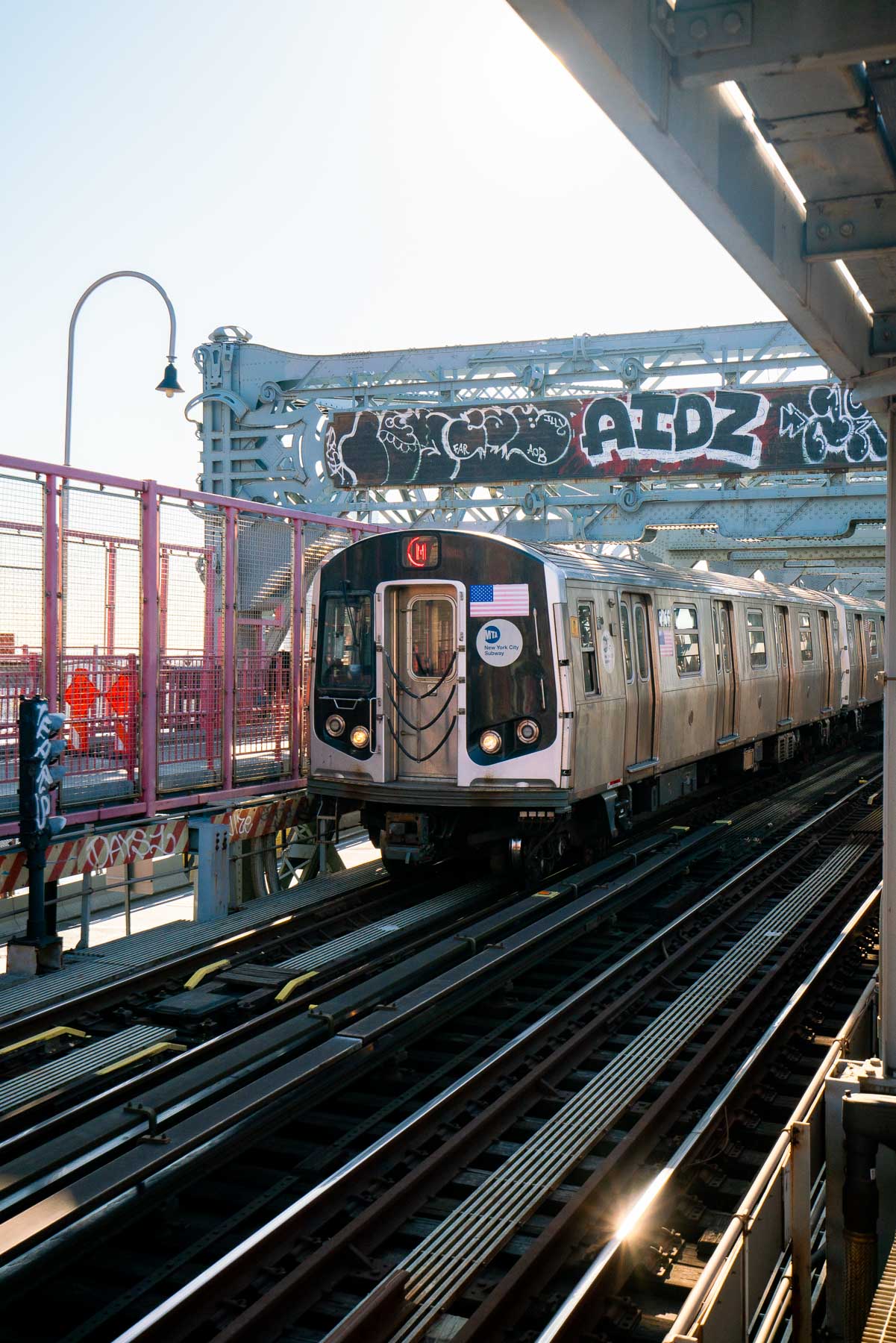
From Brooklyn Heights or DUMBO, you can be in the Financial District in about 20 minutes, and honestly that beats plenty of Manhattan-to-Manhattan trips. From the right corner of Williamsburg, the L train has you at 14th Street in a handful of minutes. But from the far edges of Brooklyn, you are looking at 45 minutes to an hour to reach Midtown, on a good day, before anything breaks.
So the real math is not Manhattan rent versus Brooklyn rent. It is Manhattan rent versus Brooklyn rent plus your commute plus how many trains serve your block. A cheaper apartment that adds 40 minutes to each end of your day is not always the deal it looks like on paper. Sometimes it absolutely is. It just depends on how you value your evenings.
 Subway-Manhattan-Bridge-09034.jpg
And factor in the subway for real. The base fare is $3.00 and a week of daily riding hits the $35 weekly cap, after which you ride free, so whichever borough you land in, you are on the train, and a block with two or more lines is worth reaching for. If you want the full arithmetic, I broke down how the fare cap actually works and what a month of commuting really costs.
So who is Manhattan actually for
Manhattan is for you if your time is worth more to you than your money right now. If you work long or unpredictable hours and cannot afford to lose an hour a day to the G train. If your social life is your oxygen and you want to be able to say yes to a 10pm plan without calculating the ride home. If you are only here for a couple of years and you want the concentrated, cinematic, overwhelming version of New York before you go.
Manhattan is also, frankly, for people who have made their peace with a smaller apartment in exchange for a bigger city. If you spend most of your waking life out in the world and use home as a place to sleep and recharge, the tiny footprint stops mattering. Some of my happiest New York years were spent in an apartment I would not wish on my worst enemy, in a neighborhood I would move back to tomorrow.
And who is Brooklyn for
Brooklyn is for you if you want to build a life with some breathing room in it. If you cook, if you have people over, if you want a couch and a desk and a bedroom door that closes. If the daily texture of your neighborhood matters to you more than being fifteen minutes from Midtown. If you are settling in for the long haul rather than passing through.
Brooklyn is for the version of you that wants New York to feel like home and not just like a set. It rewards you for staying, for learning your blocks, for finding the cafe and the bar and the park bench that become yours. If you are trying to figure out which specific corner of the borough fits, my honest guide to NYC neighborhoods gets into the character of each one without the real estate gloss.
What I would actually do
If I were landing in New York today with a normal job and a normal budget, I would rent in Brooklyn, on a block with two or more train lines, close enough to a good line that my commute stays under 35 minutes. I would take the extra space and the extra money and the trees, and I would go into Manhattan constantly, because that is the whole point of living next to it.
If I had money to burn or a job that ate my evenings, I would rent small in Manhattan and never think about a train again. Both are correct. They are just correct for different lives.
Whatever you pick, the actual leasing part of New York is its own particular hell, and the fees can be brutal, so read my guide on how to find a no-fee apartment in NYC before you sign anything. Future you will be grateful.
New York is going to be expensive and a little unreasonable no matter which side of the river you land on. The trick is not finding the cheap option. There isn’t one. The trick is being honest with yourself about what you actually want your ordinary Tuesday to feel like, and then paying for that on purpose.
Wherever you end up, I hope your block has good coffee and at least two trains. That is most of happiness here, if you ask me.
With love from across the river,
Antonina